




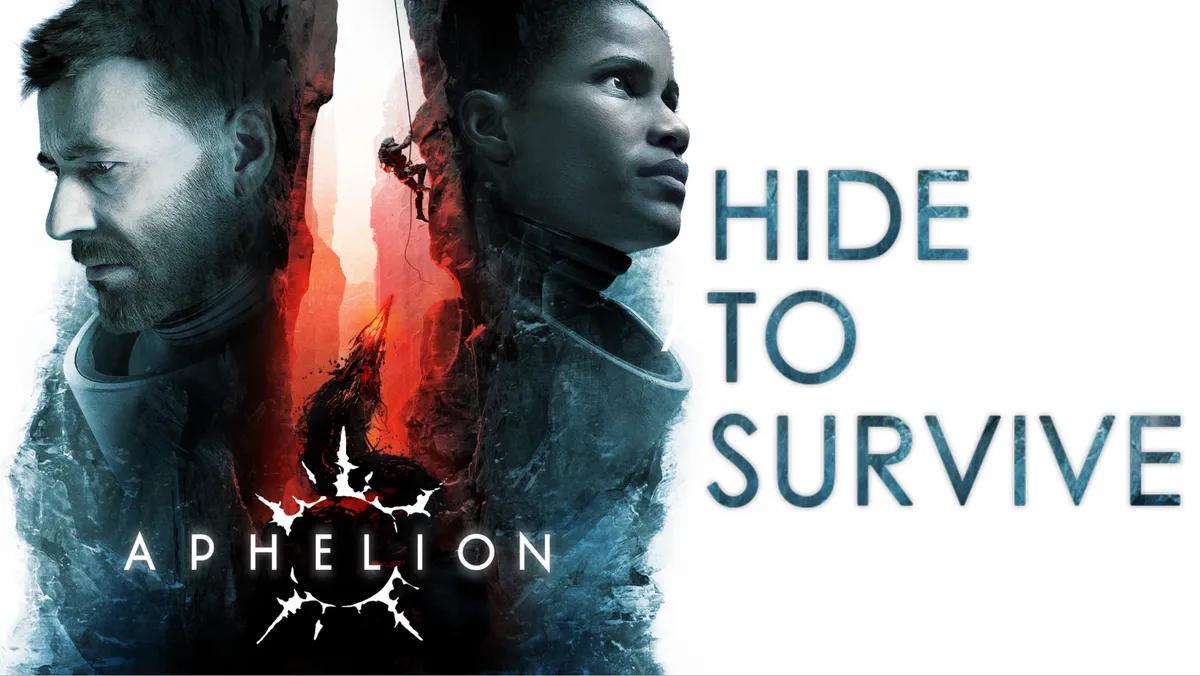
Life Is Strange-utvecklarnas spel Aphelion strandar två ex-älskare på en isplanet










 Steam
Steam Xbox
Xbox PlayStation
Aphelion released April 28, 2026, on PC, PlayStation 5, and Xbox Series X/S. The sci-fi adventure is developed and published by DON'T NOD, with science consulting from the European Space Agency. The game follows two astronauts, Ariane and Thomas, separated after Hope-01 crash-lands on the ice planet Persephone, with play alternating between Ariane's climbing-led traversal and Thomas's oxygen-managed survival, plus stealth around an alien creature called the Nemesis.
Critical reception has been split. Aphelion sits at 63 on Metacritic and 68 on OpenCritic the day after launch, with about 38% of tracked critics recommending it. The praise consistently lands on the writing, soundtrack, and visual design of Persephone. The criticism lands on moment-to-moment gameplay across parkour, stealth, and exploration. DON'T NOD's track record from Life Is Strange and Vampyr to Jusant, Banishers: Ghosts of New Eden, and Lost Records: Bloom & Rage hangs over both readings.
A crash that opens a relationship

Aphelion does not begin with the crash. It begins with the awkward post-coital silence of two people who used to be a couple and have just been a couple again, somewhere between Earth and Persephone, in a spaceship the European Space Agency might want to have words about. Ariane and Thomas are exes. They broke up years ago. They got assigned to Hope-01 anyway, and somewhere in transit, the old chemistry came back. The scene plays out before any disaster, and it does the work the rest of the game leans on. Polygon points to Orpheus going after his lost lover through the underworld, and the frame is hard to shake once you have it. Ariane spends most of the game alone, picking her way across an ice planet, narrating recordings to a man she does not know is alive.
The planet is called Persephone, which is on the nose enough to laugh at and then stop laughing at. The Earth is dying. Persephone might be habitable, and Hope-01 was sent to find out. Instead, the ship broke apart on entry, and the question of whether humanity can move here gets quietly displaced by the question of whether two people can find each other before the planet finishes whatever it is doing. Aphelion is more interested in the second question. That trade is the game's clearest decision, and most of what works and most of what doesn't follows from it. The mystery the game half-answers, about why a stable orbit is somehow losing ice and what happened to a prior expedition Hope-01 wasn't told about, is real. It is also not the engine of the experience. The engine is Ariane, wondering, every few minutes, whether Thomas is still breathing. Without that, Persephone is just a snowy room with riddles in it. With that, every climb has a clock.
Climbing that doesn't quite climb

The traversal is the part the press largely agrees does not work. GamesRadar is the bluntest, calling the parkour Uncharted-like in a year when Uncharted-like is no longer a compliment, and the comparison sticks because the cadence is exactly that: run, ledge, leap, hang, pull up, next ledge. Aphelion adds a single wrinkle, a button to time as Ariane's hand finds the surface, and a different button to recover if the first one missed. It is supposed to make climbing reactive. What it does instead is double the inputs needed to scale a wall that, on inspection, was not asking for any of them.
I miss a grab twice in the same chapter. The first time, Ariane jumps, hits the rock, and her arms windmill in midair for a full second before she falls. The second time the same thing happens at a different ledge, with no clearer read on what went wrong. There is no satisfying parse, no clean input I can identify as the one I should have made differently. There is just the animation playing out and the respawn. DON'T NOD made Jusant two years ago. Jusant was a climbing game that thought about climbing, that turned every reach into a small puzzle, that respected the controller as an instrument. Aphelion does not seem to care about that lineage, or did not have time to care, and the climbing exists because the levels need to get from one cinematic to the next.
Some of the chapters mitigate this. There is a section in an ice storm where Ariane has to wait between gusts to thaw the frost on her suit before crossing to the next bluff, and the cadence forces a patience the standard climbs don't. Another chapter transitions from a rock face into a pure stealth approach against the Nemesis, and the genre swap reads as relief. Those moments are scattered, though. The default is the parkour, and the parkour is fine, and fine is the wrong adjective for a studio that made Jusant.
The Nemesis section, between dread and routine

The Nemesis is a slithering shadow of black water that hunts Ariane through sound. It cannot see. It hears footsteps and splashes and ice cracking under a boot, and the level design uses this as a leash. You can throw distractions with a scanner. You can crouch-walk and wait for the thing to drift past. Most outside coverage finds the stealth shallow by the third or fourth encounter, and on a mechanical level the assessment is correct: the systems do not get deeper, and the trick is the same trick you learned in chapter two.
The reading is mechanically right and emotionally wrong. The Nemesis sections worked on me in a way the design-doc version of them suggests they shouldn't. The first time the thing slid into view, I held my breath without noticing I was doing it. The fifth time, knowing the script (distract, crouch, run), I held my breath again. Some of that is sound design, which the audio team clearly spent the budget on. Some of it is the absence of combat. Aphelion does not let you fight back, and the lack of agency reads as atmosphere rather than frustration. The stealth does not need more depth. It needs to keep being a held breath in a wide white room, and most of the time it is.
The creature itself helps. Descriptions of it as a black snake of vapor or a cloud of shards undersell what's actually on screen, which is closer to the surface of an oil slick suspended in the air, behaving the way an apex predator behaves when it has all the time in the world. The Nemesis is patient. It does not chase, exactly. It cruises. Cruising is more frightening than chasing, in a slow game with no fight option, and the design knows it.
Cinematic seams in the gameplay

There is a point most coverage arrives at, with varying degrees of patience: the gameplay exists to move you between cutscenes. DualShockers puts the fairest version of the complaint, describing Aphelion as a game that operates more as a way to shuttle you from one cinematic to the next. The phrasing is meant as a reservation. It is also a description, and the description is accurate. Ariane climbs because the next scene is up there. Thomas changes oxygen tanks because the next document is in the next room. The game is a delivery system for its own writing.
What I want to defend, against the consensus, is that the writing is good enough to deserve the delivery system. The audio logs Thomas leaves for a woman he doesn't know are listening have a tightness to them that most game writing doesn't bother with. Ariane's monologues, even when they slip into overexplaining what the player can already see, carry the weight of someone who has spent too long alone with her own decisions. The voice work helps, especially Vanessa Dolmen as Ariane, who plays the character like a person trying to be a professional through the worst week of her life. Aphelion would lose itself if the gameplay tried any harder. It might also lose itself if the gameplay tried at all. The space between those two things is where the studio is sitting, and there is a version of this conversation where that space is the interesting part of the discussion rather than the disqualifying one.
There is a moment a few hours in where Ariane finds a recording Thomas made before the crash, addressed to her, made when neither of them knew the mission would do what it did. The recording is short. It is also unselfconscious in a way the recordings she makes for him afterward can't be, and the contrast lands harder than any of the survival mechanics around it. The game's best instincts are in those pieces. The mechanics around them are scaffolding. The scaffolding does its job. Nobody is going to write home about scaffolding.
Thomas's chapters get less attention than they deserve. He can't climb because of his injury, and the game replaces traversal with environmental investigation: scanning logs, piecing together what happened to the previous mission, hunting down door codes in an abandoned base. The pacing is slower and more interior, and the writing leans hard on the audio logs he records on the assumption that Ariane might be listening. One mid-game stretch has him alone in a research module reading the personnel files of people who died there before he arrived, and the game briefly remembers the studio that made Life Is Strange. It does not remember it for long. It does remember it.
After the credits, Ariane is still walking

There is a moment late in Aphelion that I have been turning over since I finished. It is not a twist and not a setpiece, and saying anything specific would ruin it. What stays is not the mystery of Persephone, which the game half-answers and half-leaves alone, and which Thomas's investigation gestures at without resolving. It's the version of Ariane who keeps walking after the mission has stopped mattering to her in the way it was supposed to matter, walking because there is one person on this planet she has unfinished business with, and the planet doesn't get to decide when that business is done.
Persephone has a quality the screenshots flatten. There are moments where Ariane crests a ridge and the planet opens out into something that does not look like a game environment so much as a still from a Denis Villeneuve film without a budget for actors. The visual language commits. The architecture of the abandoned bases is austere in a way that suggests the studio cared more about how a place would feel to be inside than about how it would photograph. The audio team understands what to do with that kind of space. The wind across the ridges is not used to fill silence; it is used to remind you that the silence is what you are listening to.
The game runs about six to ten hours, depending on how much of the optional logging and scanning you do. It is short. Some of the criticism centers on that shortness, and some of the praise centers on it being the right shortness for the kind of story Aphelion is telling. The 38% recommendation rate on OpenCritic the day after launch reads as a real disagreement, not a misfire. DON'T NOD makes games like this every two or three years now: small, narrative-led, mechanically modest, more interested in two characters than in a hundred systems. The complaints aren't new. The audience for what the studio actually does well isn't new either. The new thing is space. The icy planet looks gorgeous, the creature that hunts by sound is genuinely unsettling, and the relationship at the center hurts to watch in the end.


 Det har lyckligt kopierats... Tack för att du delar vårt innehåll!:

Kommentarer