




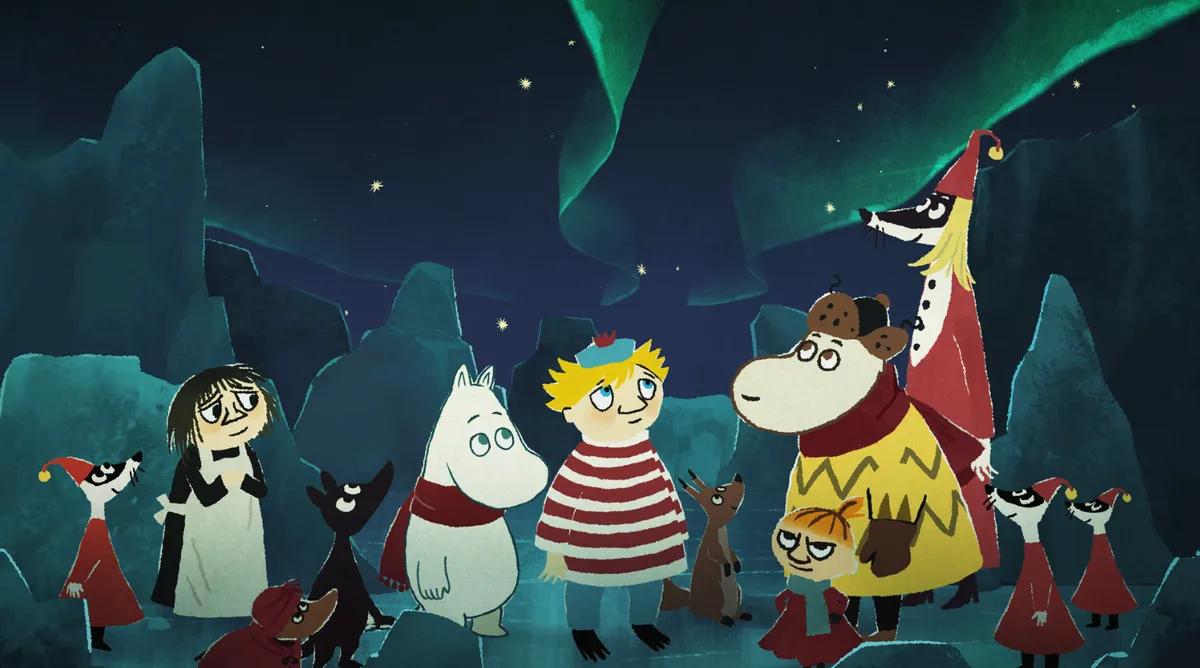
Mumintrollet vaknade på vintern — Ingen sa att han skulle gilla det










 Steam
SteamMoomintroll: Winter's Warmth released April 27, 2026 on PC, Nintendo Switch, and Nintendo Switch 2. Developed and published by Hyper Games alongside Kakehashi Games, the game is a cozy exploration adventure based on Tove Jansson's beloved Finnish fairy tales. Players control Moomintroll, who wakes early from hibernation to find his parents still asleep, winter still raging, and a quest to light the Great Winter Bonfire before spring can return.
The game is a spiritual successor to Snufkin: Melody of Moominvalley, sharing its world and characters without continuing that story directly. It carries an ESRB Everyone rating. Critical reception landed broadly positive at launch, with scores clustered around 4/5 and 8/10 across outlets that covered it.
The Winter That Thinks About Death

Early in the game, the story touches on death. Not abstractly — it comes before Moomintroll has done anything useful, before the world has warmed up to him. It's a blunt move for a children's story, and it sets a tone that the rest of the game keeps returning to without ever committing fully to.
This is where the Moomin source material earns its place. Tove Jansson wrote Moominland Midwinter with winter as a kind of philosophical condition — things go dormant, things end, things come back. Prism Peak from SIGONO, a recent release that places photography at the center of a spirit-world journey about grief and faded memory, carries a similar charge from a different angle. As I remember, OPUS: Prism Peak builds its entire emotional logic around the act of capturing what disappears. Moomintroll: Winter's Warmth is quieter about it, but the feeling of winter as a season for sitting with mortality runs underneath even the silliest quests.
DualShockers tied this directly to the game's Nordic DNA — the observation that a Finnish franchise might be more comfortable sitting with somber material than many of its genre peers feels accurate. The existential content isn't wallpapered over with cheerfulness. It's threaded through, which is the harder thing to do.
Waking Up in the Wrong Season

Moomintroll is a character whose relationship with winter is personal. He hates it. He finds it grim, quiet, and full of chores other people keep dumping on him. That's the entry point — not a grand adventure hook but a domestic one: the furnace went out, and Moominmamma and Moominpappa won't wake up.
From there, the world expands slowly. Moomintroll digs through snow-covered bushes, throws snowballs, climbs rope lines, and chops through ice. The tools stay winter-themed throughout — gloves for packing snowballs, a shovel for clearing drifts, an axe for cutting logs and ice. Each one upgrades once, which doesn't transform the gameplay but tightens it. The map isn't open, but it opens: each new tool unlocks more of the landscape, and the village grows from one small house into something that feels like a place people actually live.
I notice this world is doing something more than cozy dressing. The snow leaves trails wherever you walk. Footprints sit there until you come back. That's a small thing, but it makes the landscape feel like it notices you.
Snowballs, Fetch Quests, and a Vase Nobody Finishes

The quests fall into a familiar cozy range. Fetch tasks, missing items, and characters who need one more thing before they'll cooperate. A few go somewhere unexpected — a hide-and-seek sequence in the snow that requires active searching, not just checking waypoints. Many don't need to be finished before the final bonfire. The game flags its point of no return clearly and asks whether you want to go back.
ScreenRant landed on A Short Hike as the closest comparison — the pacing, the small-stakes exploration, a mountainside that takes time without pressure. I think that's the right instinct, but it flattens how much more winter intrudes here. A Short Hike is warm and optimistic from the first steps. Moomintroll's world is colder, more grudging. The thaw is the destination, not the starting condition.
There are repetitive sections. Shoveling snow and rolling large snowballs come up often enough to feel like filler by the third time. The snowball fights don't escalate in difficulty, which keeps them fun but also keeps them minor. One reviewer still hadn't found the final piece of Moominmamma's broken vase by the time the credits rolled. That's either a cozy mystery or a frustrating one, depending on the player.
Too Ticky, Little My, and the Weight of the Cast

The characters do a lot of work. Moomintroll's open hostility to winter — his flat refusal to pretend this is fine — gives the game a comic spine. The supporting cast cuts in different directions: Too Ticky is steady and dry, Little My is aggressive, the winter beings Moomintroll meets range from melancholy to absurd.
TheGamer traced Moomintroll's arc specifically — the way the valley comes to see him as capable, and what it means to watch a character overcome fear in a genre that usually skips the fear altogether. I found that reading to be accurate. The arc isn't complicated, but it earns its conclusion. Moomintroll doesn't become brave so much as he becomes tired of being scared, which is a different thing and more believable.
The game borrows from a builder sandbox released recently on PC, High Above, that same quality of atmosphere-as-craft, not a backdrop but something the player actually inhabits. Both games are doing mood as a design commitment, not decoration. Even if it sounds very drawn out now, the comfort I got while spending time in both games seems really similar to me. Moomintroll: Winter's Warmth does it through dialogue and environment simultaneously, which is harder to pull off.
What the Bonfire Costs

One save-related anxiety runs through more than one piece of coverage. The game autosaves, but nothing on screen tells you that. A player who sinks several hours in and then wants to close without knowing whether progress will hold can spend an uncomfortable amount of time hunting for a save point that doesn't exist. Once you know it autosaves, it's fine. Until then, it's a small panic dressed up as a design choice.
The point of no return is handled better — the game is direct about it, gives you the option to return and finish side quests, doesn't rush you toward the bonfire before you're ready. That clarity is worth noting because cozy games often lose players to ambiguity about completion. The quest log here is busy enough that some structure around what's missable versus what's permanent would have helped.
I keep thinking about that squirrel line. One piece of coverage mentioned it — a single line of dialogue from a minor character that apparently sent the writer into a ten-minute stare at the credits. That tracks. Moomintroll: Winter's Warmth puts its sharpest writing in the margins, tucked into conversations that aren't load-bearing, which is exactly where a children's story does its most lasting damage.


 Det har lyckligt kopierats... Tack för att du delar vårt innehåll!:



5% insättningsbonus upp till 100 ädelstenar

0% avgifter på insättningar och uttag.





11% insättningsbonus + FreeSpin


EXTRA 10% INSÄTTNINGSBONUS + GRATIS 2 HJULSPINN

Gratis case och 100% välkomstbonus


5 gratisfodral, daglig gratis & bonus

3 gratis casinos och en bonus på 5% på alla kontantinsättningar.

+5% till insättning




Kommentarer