




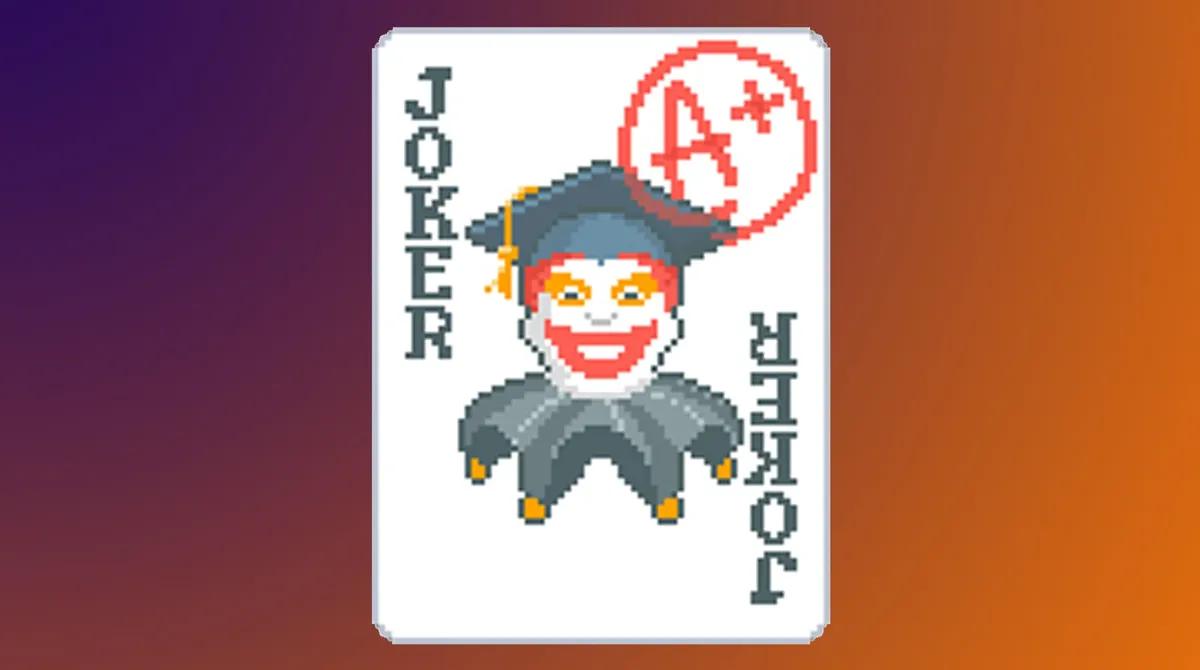
Balatro framgångshistoria: Från Playstack till GOTY på Game Awards










 Game Awards
 Steam
Steam PlayStation
 Nintendo
Balatro began on December 13, 2021, as a template folder inside a programmer's Learning/Lua directory. Its solo developer, LocalThunk, built it on evenings and weekends while holding an IT job, and expected it to reach a handful of friends. Two years later it sold 119,000 copies on Steam on launch day and went on to win three trophies at The Game Awards. This is how a card game almost nobody wishlisted became a phenomenon, told largely through the dev's own development history.
How Balatro Started as a Hobby Project
LocalThunk created the project on December 13, 2021, after saving roughly three weeks of vacation from an IT job that did not let staff carry time over to the next year. He had spent months on a different game called Autohike, lost interest, and cleaned up that code into a template. The first plan was an online multiplayer version of Big Cheat, a game he and friends had invented years earlier from the card games Big 2 and Cheat. He spent the opening week trying to adapt the Autohike engine to a card game, and on December 20 he created the CardGame folder that still holds all of Balatro's source code. He made custom pixel art for the red deck back and the playing cards, his first attempt at proper pixel art.
By the end of December, the prototype had no Jokers and no blinds to select, but it already used the CHIP X MULT scoring mechanic that defines the finished game. He credited Northernlion's videos of Luck Be a Landlord for pushing him toward a score-attack design, and he stopped playing roguelikes so he could reinvent the genre's ideas himself.
I think the most revealing choice in the whole account is that he stopped playing the genre on purpose, because he wanted to make his own mistakes rather than borrow proven designs.
In January 2022, his vacation ended, but he kept working under the title Joker Poker. He added Jokers in February and started building boss blinds, though a temporary remote-work stint out of province cut into his time. In March he stopped entirely, a habit he keeps for creative projects so he can return without resentment. He came back in May 2022, scrapped experiments like a separate reroll currency and a golden seal mechanic, and considered a Steam release for the first time in eight years of making games. His partner was finishing a PhD, and a likely move meant he might have to quit his job, so a published game looked useful for a developer portfolio. The handle LocalThunk also came from that month, after his partner joked that she named her code variables "thunk" and he paired it with Lua's local keyword.
Playstack Found Balatro on the Day It Launched

By June 2022, the game had an economy and a set of Jokers and resembled the current version. A friend came back in August after playing the beta for dozens of hours, the strongest feedback LocalThunk had received in years of sharing projects, and it pushed him to widen the scope with controller and touch support, the tutorial character Jimbo, a soundtrack, sound effects, and special editions for cards. In January 2023 his partner took a job in another province. He quit his IT job, moved with her, and gave himself three to six months to develop full time on savings.
He paid Luis Clemente through Fiverr for the soundtrack in March 2023, the only money he had planned to spend on the game, and a friend talked him into the flaming score effect he initially hated. He workshopped about 20 names, found that Joker Poker already existed as an app, and picked Balatro from the list even though none of his friends had chosen it. In April he made a trailer, captured screenshots, paid the $100 Steam fee, ran a large code refactor, and locked in the name. He downloaded Slay the Spire for the first time in May 2023 while fixing controller input, got pulled in, and said he was glad he had avoided it long enough not to copy its design.
He uploaded the first public beta to Steam in late May 2023, set the store page live, and saw nothing happen. By the end of the month the game had 48 wishlists. That is when Playstack entered the story. The publisher's head of discovery, Patrick Johnson, looks at new Steam releases every day as part of his job, and Balatro came across his screen around May or June 2023 with almost no following and few wishlists.
"I saw the game the day it went up on Steam."
— Patrick Johnson
Johnson contacted LocalThunk on Twitter, where the developer had almost no presence.
"I went to Twitter at the time and contacted LocalThunk. I think he had maybe two or three followers."
— Patrick Johnson
For LocalThunk the message arrived while he was deciding whether to abandon the game or chase it as a career.
"I got a DM on Twitter from a scout at Playstack, my eventual publisher. I was super excited, but this also complicated things."
— LocalThunk
Johnson later credited the early timing rather than any algorithm or curation tool.
"We were in there really early. And I think that made the key difference."
— Patrick Johnson
The Wishlist Climb and the Toll It Took

The numbers moved after Dan Gheesling streamed the game in mid-June 2023. Wishlists jumped, other mid-sized streamers and YouTubers followed, and the game spread by word of mouth rather than through LocalThunk's own posts. Several publishers approached him. He hired a lawyer, set up a business, and signed with Playstack after speaking to studios that had worked with them, because the deal could replace his IT salary. The game had 183 wishlists by June 10 and 2,440 by the end of the month.
He built a 50-round demo that drew 10 to 20 concurrent players, a figure that felt large to him then, with about 300 beta testers already on the full game. In July he added the skip tag system and rebuilt the tutorial into close to its final form. Dan Gheesling pitched the game to Northernlion, who played the 50-round demo on stream while LocalThunk watched in chat, then received a key for the full beta. Wishlists hit 28,661 by the end of July. Playstack and LocalThunk pulled the demo to design a stronger version, switching from a round limit to a content limit so players could play as much as they wanted, and signed the full publishing deal that set a release plan they followed almost exactly until launch.
The cost showed up in his body. Starting around August 2023 his sleep and heart began troubling him, and he tied it to the stress of working in public against a February 2024 deadline. He converted the game's text to an external English file in September to allow translation, launched the new content-limited demo near the end of that month, and spent hours in the Balatro Discord taking player feedback seriously. He brought in Maarten De Meyer to handle porting across platforms, raised the Joker count from 120 to 150 after a meeting mix-up he decided he preferred, and added an ascension system borrowed from Slay the Spire. By October he sometimes slept upright on the couch because lying down interrupted his heart. Wishlists reached 77,380 that month, 87,280 in November, and 94,212 by the end of December, when the team pulled the demo to leave room before launch.
In January 2024 he had what he feared was a heart problem while watching The Abyss with his partner. A doctor told him it was an anxiety attack, not a heart attack or heart failure. He ran a six-streamer invitational tournament on January 19, watched MurphyObv's broadcast over takeout sushi, and called it his favorite moment of the pre-launch period. Hafu won. The launch date went public for February 20, and wishlists closed the month at 114,977.
Launch Day and The Game Awards

LocalThunk kept implementing features into February 2024 and leaned on a private server of community testers he trusted to surface flaws before release. Balatro was one of the most played games of that month's Next Fest. He started playing his own game about a week before launch and found it fun, a moment he described as proof he had built what he set out to make. The review embargo lifted on February 19. PC Gamer scored it 91, and by the end of the day the game sat above 90 on both Metacritic and OpenCritic. Wishlists reached 208,401 by launch day.
The game went live 15 minutes early on February 20, at 8am PST across all platforms. LocalThunk had expected to spend the day and the following month patching a disaster.
"I cannot describe to you how nervous I am that I'll be patching like a madman not only all day, but all month."
— LocalThunk
Nothing broke. He checked the Steam sales page a couple of hours in and found 50,000 copies sold and more than $600,000 in revenue, more than he had earned in his life to that point. By the end of launch day Balatro had sold 119,000 units on Steam alone, a result 10 to 20 times larger than anyone involved had predicted. His partner came home, hugged him, and they ordered burgers and opened champagne.
The game kept climbing. It passed 500,000 copies within ten days of launch. At The Game Awards 2024 it won Best Independent Game, Best Debut Indie Game, and Best Mobile Game.
I think those wins rewarded the exact instinct that made the project risky, which was building the game he wanted rather than the one the market expected.
Two Years On: 5 Million Sales and a Rating Fight

Balatro crossed 5 Million Sales after the awards, up from 3.5 million in December 2024 and more than double its total the previous August. The mobile release drove much of that growth alongside the award coverage, which carried the game well past the point where a publisher would call it a hit.
The game also won a fight over its age rating. The PEGI 18+ rating dropped to 12+ after a formal appeal, with PEGI's Complaints Board concluding that the game's fantastical elements offset its use of poker hands. PEGI had originally applied the adult rating on the grounds that the game taught gambling skills, even though Balatro has no real-money betting, no microtransactions, and no way to cash out, while EA Sports FC 25 and its real-money packs carried a PEGI 3. PEGI said it would build a more granular system for rating gambling themes after appeals tied to Balatro and Luck Be A Landlord. LocalThunk marked the decision by showing off a set of 18+ "Limited Edition" copies across platforms.
On the game's second anniversary, LocalThunk reassured fans on 1.1 Update, confirming the long-delayed patch was still in development after he postponed it to protect his hobbyist approach and worked on a balance patch and the mobile port first.
"Yes, I'm still working on 1.1."
— LocalThunk
He tied that note to a blog post called "Bad Grades" about dropping out of an engineering degree to switch to computer science, a decision he made after missing several weeks of a semester.
"I loved programming. I wasn't any good at it."
— LocalThunk
The Balatro template has already drawn imitators and darker spins on its loop. Panik Arcade's CloverPit takes the gambling-roguelike rhythm and turns it grim, locking a nameless player in a dungeon and forcing slot-machine spins until a target score is met, with the floor dropping into an abyss on failure. It swaps Balatro's mischievous dealer for an unseen captor, borrows PS1 horror visuals, and offers charms in place of Jokers. It is out now as a full game after an earlier demo.
"Last night I stayed up until the early hours of the morning drawing pixel art, writing code, and listening to music in my quiet house."
— LocalThunk
Playstack itself is in transition. Integrated Media Company, a subsidiary of the private equity group TPG that owns Fandom, GameSpot, Curse, and TV Guide, has moved to buy a majority stake, and current owner TrueFin is seeking approval of the $151 million deal. LocalThunk has said the success brought attention, heartache, fear, and stress, yet he still recognizes the person who started the project. He recently found the files for the old, unfinished strategy game that became his original template and played it for a couple of days, calling it pretty fun.


 Det har lyckligt kopierats... Tack för att du delar vårt innehåll!:



5% insättningsbonus upp till 100 ädelstenar

0% avgifter på insättningar och uttag.





11% insättningsbonus + FreeSpin


EXTRA 10% INSÄTTNINGSBONUS + GRATIS 2 HJULSPINN

Gratis case och 100% välkomstbonus


5 gratisfodral, daglig gratis & bonus

3 gratis casinos och en bonus på 5% på alla kontantinsättningar.

+5% till insättning




Kommentarer