




Alla fraktioner i STALKER 2: Baser, rykte och vem man ska ta parti för






Twelve groups hold territory in the Zone, and Skif belongs to the one with no rules at all. You cannot enlist in any of them, which surprises anyone arriving from a game where faction choice is a menu screen. What you get instead is a reputation that moves every time you finish a job or shoot the wrong person, and that reputation decides which traders open their stock to you and which patrols shoot on sight. This guide covers all factions in STALKER 2, their bases where the game confirms one, and how your standing with each of them actually works.
All 12 Factions in STALKER 2
Two of these are research bodies rather than armies, and two more only exist because other factions collapsed. Where you end up standing with each is settled long before the finale, though the finale is where it shows, and All STALKER 2 Endings: Four Base Routes and Both Cost of Hope Outcomes traces which allegiance leads to which conclusion.
Faction | What they want | Default stance toward Skif |
|---|---|---|
Loners | Artifacts, gear, and enough coupons to keep going | Friendly, this is Skif's own group |
Bandits | Whatever they can take off someone else | Hostile in most encounters |
Duty | The Zone destroyed and sealed for good | Neutral, shifts on your choices |
Freedom | The Zone left open and free of government control | Neutral, shifts on your choices |
Ecologists | Research data, samples, and anomaly readings | Friendly, they hire stalkers |
Mercenaries | Payment, from anyone | Hostile |
Military | Control of the perimeter and everyone crossing it | Hostile |
Monolith | The Monolith protected and outsiders killed | Hostile without exception |
Noon | Radioactive and chemical waste, and their own future | Conditional |
Spark | Revenge on the Ward and SIRCAA | Conditional |
SIRCAA | Understanding and controlling the anomalies | Conditional |
The Ward | Enforcing SIRCAA's authority across the Zone | Conditional |
How Faction Reputation Works
Reputation is the only faction system the game gives you, and it moves in both directions without announcing itself.
- Finishing quests for a group raises your standing with it.
- Failing missions or killing members drops it.
- Standing gates access to quests, traders, and stock you cannot buy anywhere else.
- Backing one side in a rivalry costs you standing with the other.
The practical result is that a violent playthrough closes doors quietly. Traders keep their better armour and their better guns behind a reputation wall, which is worth remembering before you clear a camp for the ammo in it, and STALKER 2 Weapon Tier List: Every Gun Ranked, Including Update 2.0 and DLC shows which of those locked shelves are worth staying friendly for.
Can You Join a Faction in STALKER 2?

No. There is no enlistment, no uniform, and no membership screen. Skif stays a Loner from the first hour to the last.
What you can do is support a faction by working for it, which is close enough in practice. Missions completed for a group unlock gear associated with that group, shift the balance of power in the Zone, and change which characters greet you and which raise a rifle. Whether Duty prevails or Freedom holds its ground comes out of the accumulated weight of those jobs rather than a single declaration.
Every Faction Explained
Twelve entries, starting with the group Skif belongs to and ending with the two organisations that arrived with the sequel. Several of them keep their own weapon and armour lines, and Best Armor and Artifacts in STALKER 2: Suits, Slots and Cost of Hope Additions covers which faction suits are worth the reputation grind.
Loners

Free stalkers with no organisation above them, working the Zone for artifacts and equipment they can sell or use. They have no ideology and no quarrel with most groups, which keeps them neutral by default. Their gear runs from a leather jacket and a starting pistol up to whatever a veteran has managed to buy. Skif is one of them, and that is the reason nobody in the Zone owes him anything.
Bandits

The bottom rung. Bandits work in small gangs, living off robbery, extortion, and killing anyone who looks easier to shoot than to argue with. They set traps on routes lone stalkers use and pick off anyone travelling without support. They are not the story's antagonist, and they will still cost you more ammo over a playthrough than any organised faction.
Duty

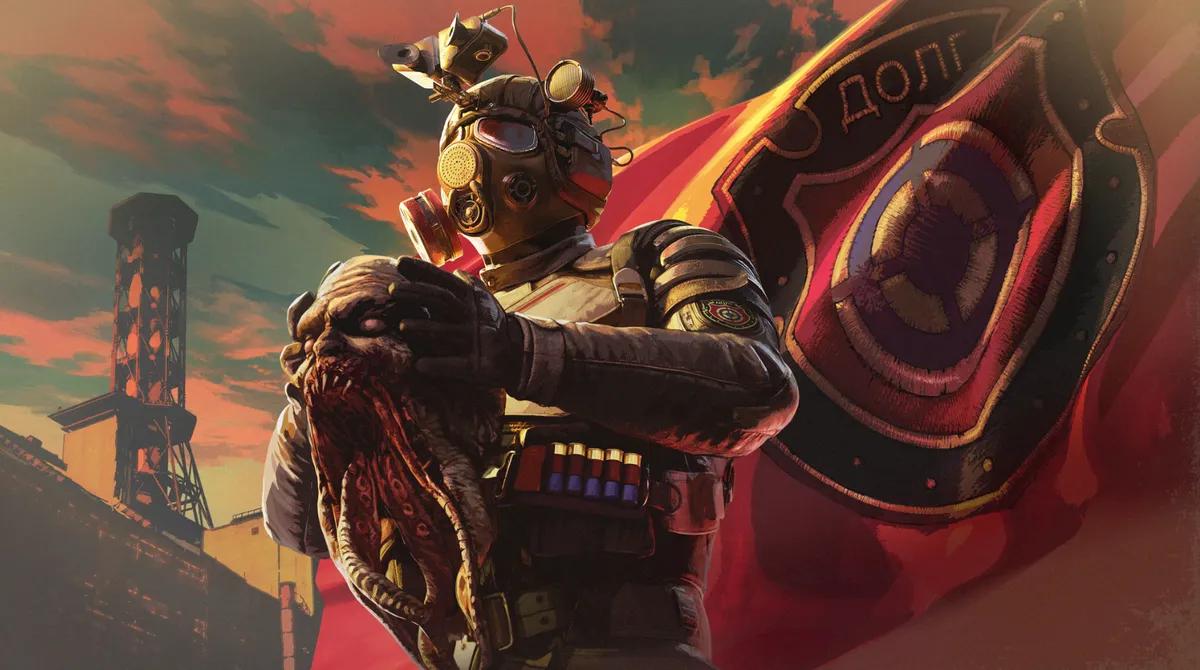
A paramilitary organisation run on military lines, with rank, discipline, and a single stated goal: the Zone is a threat to humanity and has to be destroyed. Their uniforms are the strict, dark red kit you can identify across a field. Duty spent years as one of the strongest powers in the Zone and enters STALKER 2 in a much weaker state, which colours how they behave toward outsiders. Their feud with Freedom is the oldest argument in the setting.
Freedom

Freedom takes the opposite position: the Zone is worth studying, worth keeping, and worth defending from anyone who wants to shut it down. They run without strict hierarchy, though members still follow their seniors on operations, and their camps have a loose atmosphere that reads as carelessness until the shooting starts. If you have not made yourself useful to Duty, Freedom will talk to you.
Ecologists

Also called Scientists in the game's own text, which is why guides use both names. They are research teams working for government and private backers, studying the environment, the creatures, and the anomalies, and they hire stalkers to do the fieldwork they cannot survive themselves. They pay well for artifacts and readings. They are also the group Monolith targets most consistently.
Mercenaries
Contractors who take any job that pays: assassination, infiltration, reconnaissance, extraction. They are secretive, distrustful of anyone who might interfere with a contract, and they do not care who hired them. For Skif specifically they are among the more persistent threats in the game, because sooner or later somebody pays them to be one.
Military
Ukrainian forces deployed to secure the Zone and control who crosses in and out. Their job is the perimeter and the safety of everything beyond it, which puts them at odds with almost every group operating inside. They are trained, equipped, and uninterested in your reasons for being there.
Monolith

Fanatics who believe the Monolith at the centre of the Zone is divine and kill anyone who approaches it. They are hostile to everyone, without exception and without negotiation, and their psi-conditioned discipline makes them far more organised than their zealotry suggests. There is no reputation path with Monolith. There is only distance.
Noon
Former Monolith members who woke up when the psi installations that controlled them were shut down. They now work the Zone collecting radioactive and chemical waste, based out of Wild Island. The faction is split between two leaders, Brodyaga and Faust, who disagree about what Noon should become, and that internal fight matters more to the story than anything Noon does externally.
Spark

Survivors of the old Clear Sky faction, formed after the Ward and SIRCAA destroyed their group. They exist for retribution and treat both organisations as legitimate targets. Scar, the protagonist of Clear Sky, is the figure at their centre, which links them directly to the events of the earlier games rather than to Zone politics.
SIRCAA
The Scientific Institute of Research of the Chornobyl Anomalous Area, a government-backed body studying the Zone's anomalies with the stated aim of understanding and controlling them. Dr Dalin runs it. Their research programme includes experiments that would not survive an inspection, and that gap between the stated mission and the actual work drives most of the story's conflict.
The Ward

SIRCAA's armed wing, led by Colonel Korshunov, tasked with enforcing institute policy and protecting its research operations. They are the best-equipped organised force you will meet in the Zone and behave accordingly. Where SIRCAA writes the objective, the Ward is what arrives to secure it.
Faction Base Locations
Base locations are the least reliable data in circulation for this game, because several widely copied lists still use regions from the earlier titles. The table below only includes bases the game itself puts on the map. Where a faction has no fixed home, it says so rather than guessing.
Faction | Base |
|---|---|
Loners | Zalissya, Slag Heap |
Bandits | Zaton, Garbage |
Duty | Rostok, Iron Forest during Cost of Hope |
Freedom | Iron Forest during Cost of Hope |
Ecologists | Yaniv |
Monolith | Monolith Control Center, Prypiat |
Noon | Wild Island |
SIRCAA | Northern Perimeter |
The Ward | Northern Perimeter, Lesser Zone |
Mercenaries | No fixed base |
Military | No fixed base, operates the perimeter |
Spark | No fixed base |
Territory also moves as the campaign progresses. A camp friendly on your first visit can be occupied by somebody else forty hours later, and the Iron Forest is the clearest example of that, since Duty and Freedom share it under a treaty that does not survive the expansion.
Duty vs Freedom in Cost of Hope

The expansion takes the series' longest-running feud and forces it to a conclusion. Duty and Freedom hold the Iron Forest together under an agreement called the D4 treaty, which collapses during the mission Distant Mirage. From that point the two groups are at war and you are standing between them.
- Zulu speaks for Duty. Mavka speaks for Freedom.
- The break happens at the X16 laboratory during The Destructive Power of the Mind.
- Back Zulu and Freedom turns hostile, with Mavka among them.
- Back Mavka and Duty turns hostile, with Zulu among them.
- Side missions stay the same on both routes. The people handing them out change.
Your accumulated standing with each group colours how their people treat you in the run-up, and it does not decide the outcome. The choice at X16 does that on its own. Every Cost of Hope DLC Mission in STALKER 2 lists which quests belong to which route once the split happens.
Which Faction Should You Back
There is no correct answer, and the game is careful not to supply one. Duty's argument is that the Zone kills people and always will. Freedom's is that destroying it destroys the only place like it on earth. Both positions have bodies behind them.
For a first playthrough, the useful question is narrower: which trader stock do you want open, and which mutant-heavy region do you want cleared by somebody else's patrols? Working for the Ecologists is the safest reputation to build early, since they pay for artifacts you are already collecting and nobody treats their contracts as a betrayal. Anomaly work is what they hire for, and All Anomalies in STALKER 2: Types, Arch Anomalies and Where to Find Them covers the fields their jobs send you into.
I picked Freedom on my first run and spent the back half of the game regretting how many Duty traders had shut their doors on me. That is the actual cost of a faction choice in this game: not a locked ending, but a slow narrowing of where you can resupply. Mutant territory does not care which side you took, so keep All Mutants in STALKER 2: Full List, Weaknesses and How to Kill Them open regardless of whose colours you are wearing.


 Det har lyckligt kopierats... Tack för att du delar vårt innehåll!:



5% insättningsbonus upp till 100 ädelstenar

0% avgifter på insättningar och uttag.





11% insättningsbonus + FreeSpin


EXTRA 10% INSÄTTNINGSBONUS + GRATIS 2 HJULSPINN

Gratis case och 100% välkomstbonus


5 gratisfodral, daglig gratis & bonus

3 gratis casinos och en bonus på 5% på alla kontantinsättningar.

+5% till insättning




Kommentarer