




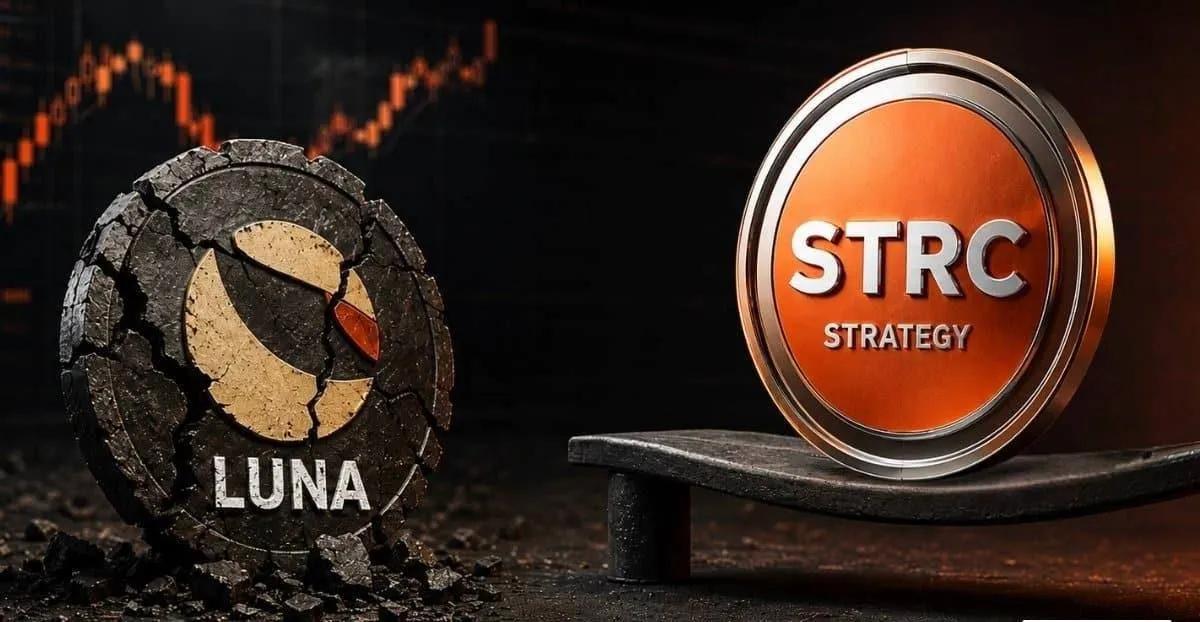
Varför analytiker jämför strategi med LUNA efter STRC:s kraftiga nedgång










 Rykten
Strategy, the company best known for its massive Bitcoin holdings, is once again at the center of debate after analysts began discussing whether one of its newest financial products could create long-term risks for the company. While no one is claiming that Strategy is on the verge of collapse, comparisons with the downfall of the Terra ecosystem have started to emerge following the recent performance of STRC, a preferred stock issued by the company to raise capital for additional Bitcoin purchases.
The discussion gained momentum after analysts at Arkham examined the structure of Strategy's financing and highlighted several areas that investors should monitor closely. The concerns stem from the relationship between STRC, dividend obligations, and the company's continued strategy of accumulating Bitcoin.
STRC is a preferred share created to help Strategy raise fresh capital. Unlike ordinary shares, it offers investors a fixed dividend, making it attractive to those seeking a more predictable return. The money raised through these offerings is largely intended to support the company's long-term Bitcoin acquisition strategy, allowing it to expand its holdings without relying solely on traditional financing methods.
Recently, however, STRC has come under pressure. The preferred shares have fallen roughly 25% below their initial reference price of $100, signaling weaker investor confidence and raising questions about the sustainability of the financing model if market conditions continue to deteriorate.
One of the biggest concerns is the cost of maintaining those preferred shares. Based on current estimates, Strategy would need to allocate approximately $1.2 billion per year to cover dividend payments for STRC holders. At the same time, analysts estimate that the company currently holds around $1.4 billion in available reserves, leaving a relatively narrow margin if market conditions worsen or additional financial pressures emerge.
These figures have prompted comparisons to LUNA, the cryptocurrency that collapsed in 2022 after the Terra ecosystem failed to maintain its economic model. In Terra's case, confidence in the system disappeared once investors questioned whether its payment mechanism could continue functioning under stress. The resulting loss of confidence triggered a rapid downward spiral that ultimately erased tens of billions of dollars in market value.
At first glance, some observers see similarities. Both situations involve financial structures that rely heavily on market confidence and both face increasing pressure when asset prices decline. However, most analysts also stress that there are important differences between Strategy and Terra. The most significant distinction is legal responsibility.
Unlike Terra's ecosystem, where maintaining the system required continuous support of its stabilization mechanism, Strategy is not legally obligated to prioritize dividend payments if financial conditions become difficult. According to the terms of the preferred shares, CEO Michael Saylor and the company have considerably more flexibility in managing cash flow than Terra ever had.
This means that if Strategy experiences financial stress, management is not automatically forced to sell Bitcoin simply to satisfy STRC dividend obligations. While suspending or adjusting payments could negatively affect investor sentiment, it would not necessarily trigger an immediate financial collapse.Even so, analysts believe another risk deserves attention.

If market conditions deteriorate significantly and Strategy eventually decides it must sell part of its Bitcoin reserves, a potentially dangerous feedback loop could emerge. Selling large amounts of Bitcoin could place downward pressure on the cryptocurrency's market price. A lower Bitcoin price would reduce the value of Strategy's largest asset, weakening investor confidence in both the company and its preferred shares. Falling confidence could push STRC even lower, increasing financing costs and creating additional pressure on the business.
This type of negative cycle is what has led some analysts to draw comparisons with previous market failures, even if the underlying structures are fundamentally different.
For now, however, most experts caution against treating Strategy as another Terra-style collapse. The company continues to hold one of the world's largest corporate Bitcoin reserves, and its business structure differs substantially from an algorithmic stablecoin ecosystem. Strategy also has access to multiple financing tools, capital markets, and corporate governance mechanisms that Terra lacked.

Nevertheless, the recent decline in STRC demonstrates that investors are paying closer attention to the long-term sustainability of Strategy's financing model. As the company continues to expand its Bitcoin position through debt and preferred share offerings, market participants are increasingly evaluating not only the value of its Bitcoin holdings but also the obligations attached to the capital used to acquire them.
In short, Strategy is not repeating the LUNA collapse today, and the two situations are far from identical. However, the growing discussion highlights an important reality: as the company's financial structure becomes more complex, long-term risks also become more significant. Whether those risks remain manageable will largely depend on Bitcoin's future performance, investor confidence, and Strategy's ability to balance aggressive accumulation with financial stability.


 Det har lyckligt kopierats... Tack för att du delar vårt innehåll!:



5% insättningsbonus upp till 100 ädelstenar

0% avgifter på insättningar och uttag.





11% insättningsbonus + FreeSpin


EXTRA 10% INSÄTTNINGSBONUS + GRATIS 2 HJULSPINN

Gratis case och 100% välkomstbonus


5 gratisfodral, daglig gratis & bonus

3 gratis casinos och en bonus på 5% på alla kontantinsättningar.

+5% till insättning




Kommentarer