




Screamer Recension: Beroendeframkallande racing med bra adrenalindos










 Steam
Steam Review
 PlayStation
 Xbox
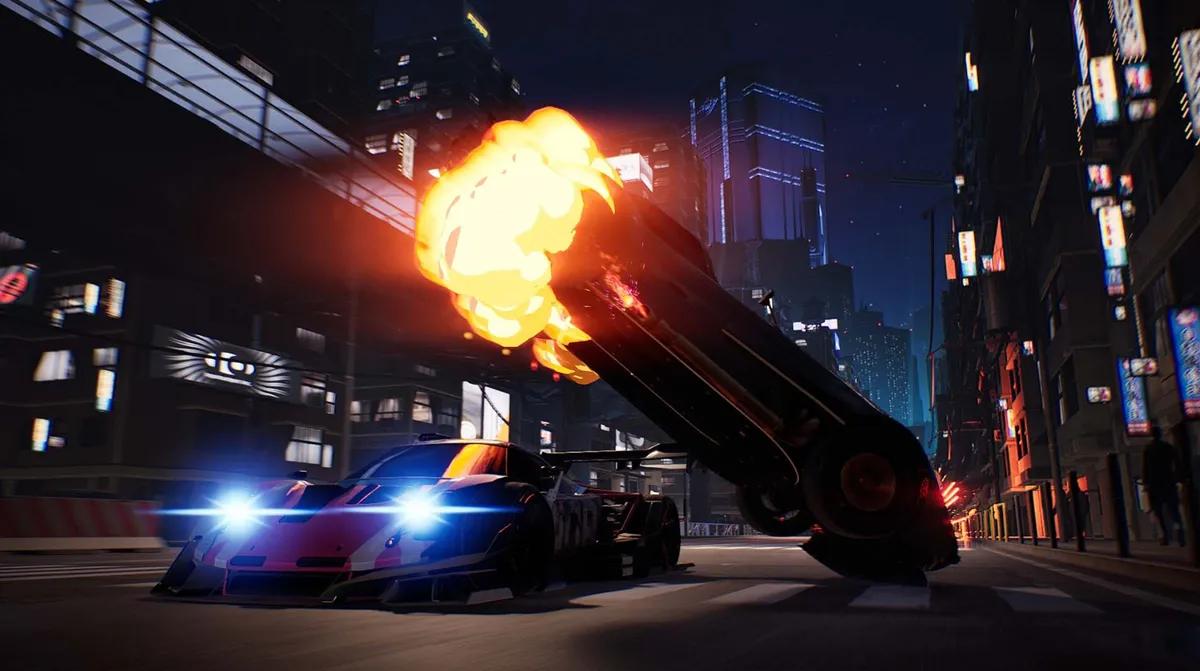
XboxScreamer arrives in 2026 as a full reimagining of a PC racing series that ran from 1995 to 2000 and then disappeared entirely for over two decades. Developer and publisher Milestone, known primarily for MotoGP and Ride, constructed something far more ambitious: an arcade racer with twin-stick drifting, a fighting-game combat layer, and an anime campaign produced with Polygon Pictures. The game releases March 26, 2026 across PlayStation 5, Xbox Series X/S, and PC. What Milestone assembled here is dense, occasionally overwhelming, and at its best, one of the most distinctive racing games in years.
A Racing Franchise Rebuilt From the Ground Up
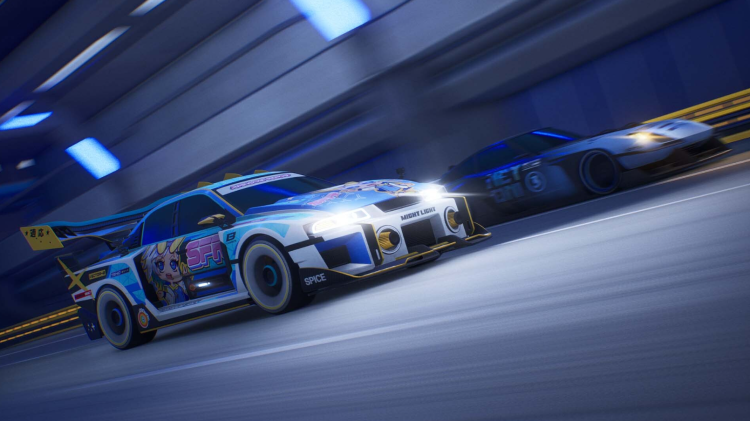
Screamer's original run produced four PC-only entries between 1995 and 2000, ending with the Screamer 4x4 spin-off. The franchise then sat dormant, overshadowed during the critical years when Need for Speed, Ridge Racer, and Gran Turismo locked down the mainstream racing audience. The 2026 reboot shares almost nothing with those earlier titles beyond the name. Milestone stripped the concept and rebuilt it around an anime aesthetic, a narrative tournament mode, and mechanical systems that draw as much from fighting games as from any racing precedent. The result sits in its own category — closer in spirit to Blur or Split/Second than to the simulation-adjacent racers dominating the current market.
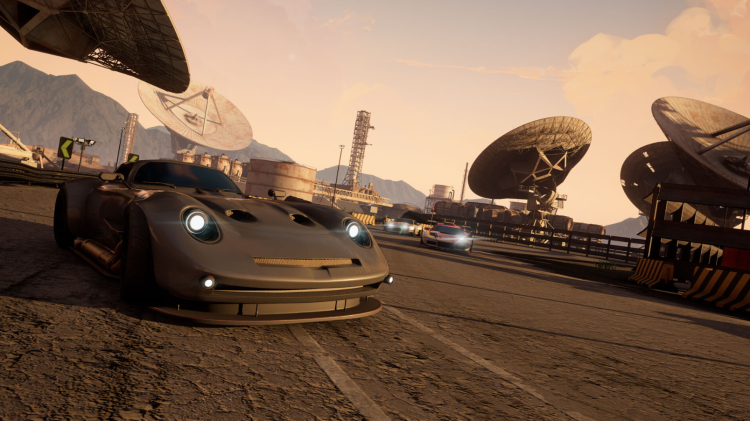
The cars are fictional, designed with extravagant bodywork and eye-catching liveries that read like they rolled out of a 1990s anime frame. Each vehicle reflects the personality of its driver, and the designs carry genuine character — Gabriel's car, with its elongated hood and retracting spoiler, stands out as a particular piece of craft. Pop-up brake lights on one of the other vehicles signal a development team given the freedom to indulge its instincts. These details matter because Screamer's identity depends heavily on its visual commitment, and the cars deliver on that front consistently.
Twin-Stick Handling and the Combat Layer
The control scheme is the first thing Screamer demands players accept. The left stick steers; the right stick controls drift angle by swinging the rear outward. Anyone familiar with Inertial Drift will recognize the concept, though Screamer's execution runs heavier and demands more deliberate timing. Tight corners require braking or lifting throttle before initiating a drift, then reapplying power through the exit. Cars carry real weight, and misjudging a corner sends them straight into barriers. Steering and braking assists exist in the menus and soften the consequences, but they blunt the sensation of control enough to function more as a crutch than a genuine aid, and stability or traction control options are absent entirely.
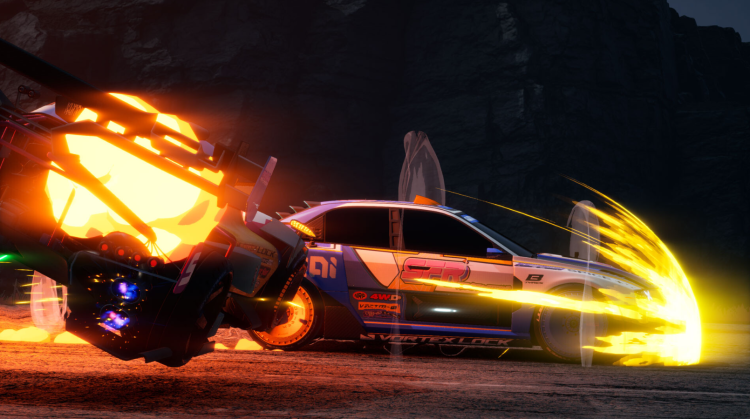
On top of the handling sits the Echo System, a two-bar combat mechanic with fighting-game logic. The left bar tracks Sync, filled through slipstreaming opponents, clean driving, and timed gear shifts when the bar indicator turns yellow. Deploying boost from a full Sync bar converts it into Entropy in the right bar. Fill two Entropy bars to activate Strike — a targeted hit that triggers a KO explosion on contact with an opponent. Fill everything and Overdrive activates, turning the car into a moving weapon. Touch a barrier while in Overdrive and the race ends immediately. Each driver carries a character-specific perk modifying how these systems operate; one driver detonates on wall contact during Strike state, making him actively punishing on technical circuits. I find the combat system rewarding once the connections between its parts become instinctive, but that point arrives only after significant failure and repetition.
The Anime Campaign and Its Structural Faults

Tournament mode is the game's primary campaign and runs roughly 20 hours if optional side episodes are included. Polygon Pictures — the Japanese studio behind Star Wars: The Clone Wars and Tron: Uprising — produced the cutscenes. Approximately 30 minutes of animated footage appears across the full campaign, and the quality is high: cinematic, fluid, and consistent with the studio's production history. The voice cast is international, with several actors delivering lines in their native languages. Troy Baker appears in a significant role. Fermi, a corgi who co-manages one of the race teams and operates a vehicle, is voiced by an actual dog.
The story follows five competing teams in an illegal tournament hosted by the masked Mr. A, with a $100 billion prize driving everyone's motivations. Themes push into darker territory than the genre standard — death, murder, revenge — and the script earns its mature rating through content and language. The dialogue alternates between sharp characterization and lines that read as deliberately, aggressively juvenile. Some of that lands as intentional camp; the line about a chocolate factory and things getting wonky operates exactly as intended. Some of it does not survive the delivery.
The structural problem is that most of the story is delivered not through those animated sequences but through visual-novel-style dialogue scenes with largely static character art and long pauses between exchanges. The pacing in these segments drags considerably. With five teams introduced in rapid succession across the opening chapters, the campaign front-loads character introductions without giving any of them space to establish stakes. I found it difficult to invest in any single driver before the next introduction sequence arrived. The story does settle — the Green Reapers' Hiroshi develops a crisis of confidence that plays against type, and Gabriel is drawn with more sympathy than his antagonist role suggests — but the opening chapter demands patience that not every player will extend.
Track Design and the Difficulty Problem
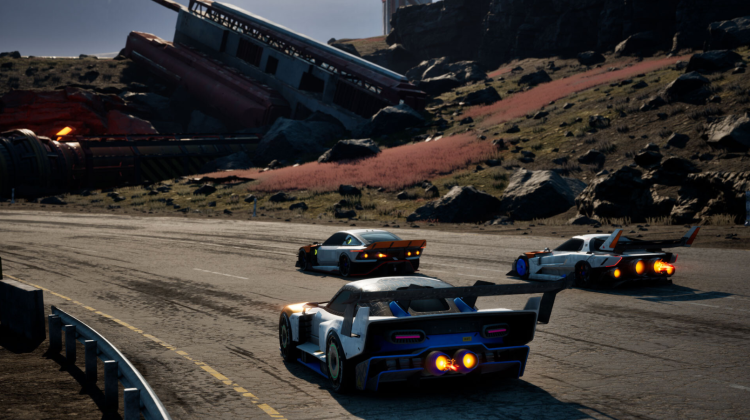
Screamer launches with 32 track layouts distributed across four environments: neon-soaked urban circuits, forests, deserts, and a fifth location revealed in the final campaign chapter. The rain-soaked city circuits deliver exactly the high-speed spectacle the game promises, vibrant and fast, lit well enough to make the twin-stick handling feel purposeful. The issue is that 32 layouts across four environments means heavy repetition across the tournament, and players will cycle through the same visual settings repeatedly before anything new unlocks.
Track quality splits sharply along one variable: corner frequency. Open layouts with long straights and sweeping, constant-radius corners let the handling operate at its intended pace. These circuits are exhilarating. The twisty tracks invert every advantage. Constant switchbacks require repeated hard braking, and Screamer's handling at low speeds is noticeably less responsive than at full pace — a car that feels planted and precise under power becomes sluggish and awkward when the driver is stabbing brakes through a tight sequence. Several of the worst technical circuits arrive in tournament mode precisely when the difficulty already spikes from other sources.
The tournament's difficulty curve is genuinely erratic. Most events on standard difficulty resolve without extended trouble, but specific missions introduce constraints that suggest insufficient playtesting. One event requires the player to KO two Green Reapers team members while also winning the race — but those team members' car icons display as blue. Another mission sends the player after Fermi the dog through a technical circuit; the dog maintains its gap regardless of driving quality, and stopping on track to wait for it to lap before landing a single hit solves the mission, which raises serious questions about intent.
Modes, Multiplayer, and Accessibility
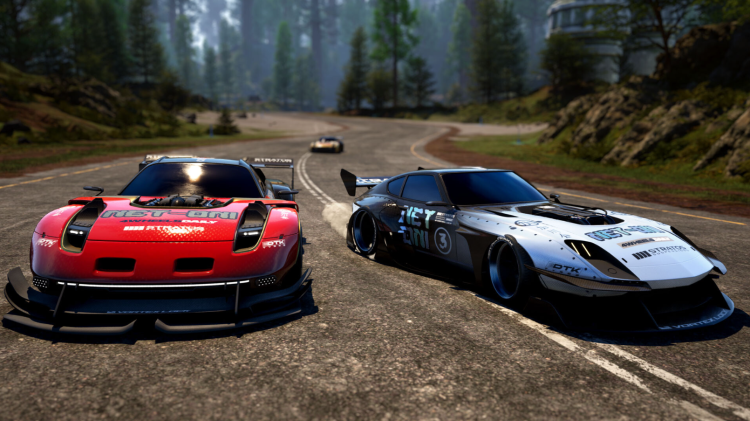
Outside the tournament, arcade mode offers customization options that extend well past standard race parameters. Players can adjust the rate at which power meters fill, toggle Overdrive availability, disable offensive attacks entirely for clean racing, and set grid sizes and lap counts independently. Overdrive Challenge runs a survival format — drive as long as possible in Overdrive without crashing, with power escalating each lap. Score Challenge adds a leaderboard format across a fixed race series. These modes provide meaningful alternatives for players the tournament has worn down.
Four-player local splitscreen is present and works. The interface compresses poorly onto smaller screens, and the mechanical depth makes Screamer less immediately accessible in that setting than a standard kart racer. The arcade mode's customization options do allow hosts to simplify the experience significantly for new players, which partially compensates. Online play supports up to 16 players in standard races and ranked team competition for groups up to three. Both modes held up in testing.
Accessibility options include colorblindness filters, an offline game speed slider, and fully remappable controls that include a dedicated one-handed mode. That configuration applies auto-throttle, assigns braking to a trigger, and merges steering and drifting onto a single stick. Given that both sticks are fundamental to the core control scheme as designed, building a functional alternative layout is a meaningful commitment from Milestone and one that deserves direct acknowledgment.
Verdict
Screamer is a 9/10 game. Milestone built something genuinely unusual: an arcade racer with the mechanical density of a fighting game, the visual production of a proper anime series, and a control scheme that takes real time to master and then rewards that investment with a pace and physical precision the genre rarely delivers
Pros:
- Twin-stick handling is demanding and genuinely rewarding once the mechanics connect
- Anime production quality and car design carry strong visual identity throughout
- Arcade mode customization and four-player local splitscreen add lasting replayability
Cons:
- Tournament difficulty is erratic, with some missions structured around flawed or unclear objectives
- Four track environments across 32 layouts generate significant visual repetition
The tournament mode carries real structural problems — an uneven difficulty curve, missions built on unclear or illogical objectives, a visual-novel presentation that slows the opening hours, and a track roster stretched thin across four environments. The combat layer overwhelms before it satisfies. But the core of the experience — twin-stick drifting at speed through neon-lit circuits, managing Sync and Strike resources under pressure, customizing arcade events to any configuration — produces racing that the genre has not attempted in a long time.
Players who clear that threshold find a racing game operating with confidence and originality in a genre that rarely attempts either. Milestone bet on something unfamiliar and built the mechanics to back it up. That alone separates Screamer from most of what the market offers.


 Det har lyckligt kopierats... Tack för att du delar vårt innehåll!:



5% insättningsbonus upp till 100 ädelstenar

0% avgifter på insättningar och uttag.





11% insättningsbonus + FreeSpin


EXTRA 10% INSÄTTNINGSBONUS + GRATIS 2 HJULSPINN

Gratis case och 100% välkomstbonus


5 gratisfodral, daglig gratis & bonus

3 gratis casinos och en bonus på 5% på alla kontantinsättningar.

+5% till insättning




Kommentarer