




Recension av Mega Man Star Force Legacy-samlingen










 Xbox
Xbox PlayStation
 Steam
Steam Review
Capcom releases the Mega Man Star Force Legacy Collection on March 27, 2026, across PlayStation 5, Xbox Series X/S, Nintendo Switch, and PC, bringing the entire Star Force DS trilogy to modern platforms for the first time. The package includes seven game versions across three distinct entries: three versions of Star Force 1, two of Star Force 2, and two of Star Force 3. Developer Capcom folded in restored cut content, updated quality-of-life tools, redrawn card art, a rearranged soundtrack, and online multiplayer across all three titles. The collection arrives roughly two decades after the original DS releases, and it delivers the most complete version of a series that has gone largely unacknowledged since Mega Man Battle Network defined the format before it.
The Story Across Three Games
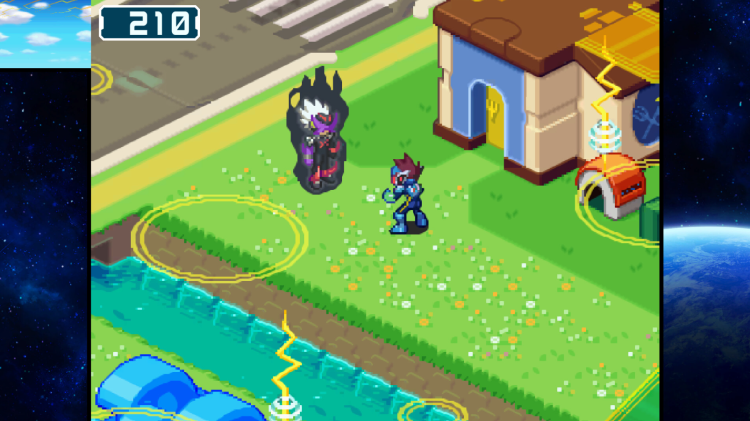
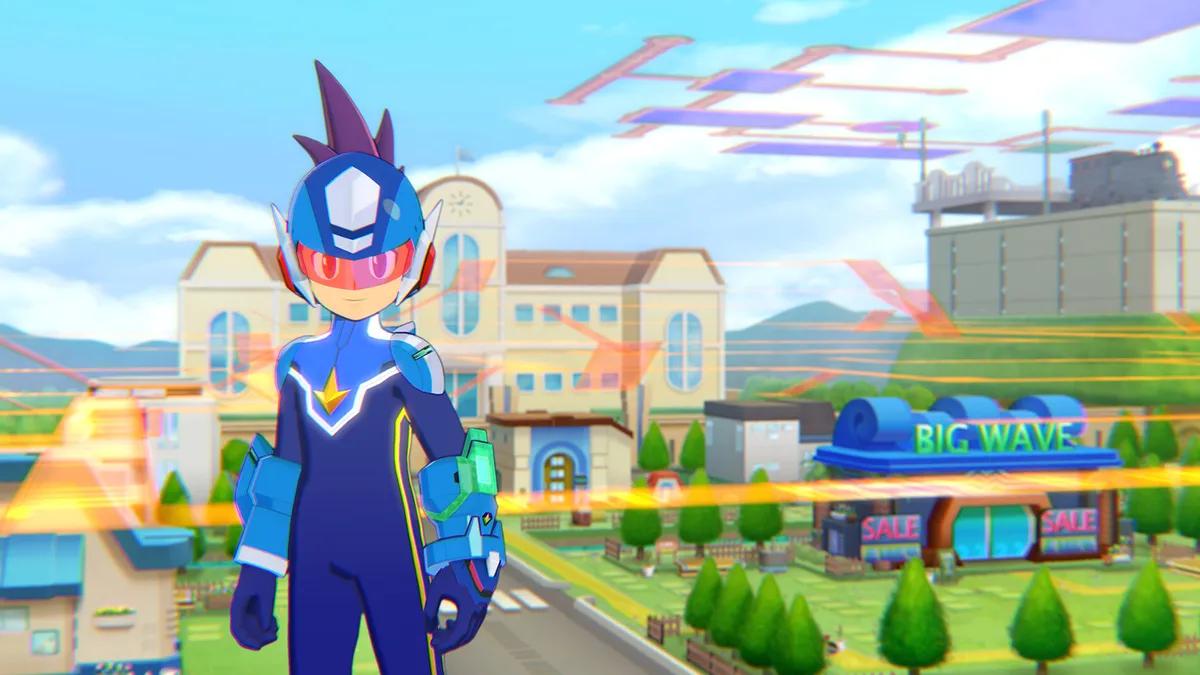
The Star Force trilogy follows Geo Stelar, a young boy whose father vanishes in a space station accident, leaving him isolated and withdrawn from school and friendships. An alien named Omega-Xis arrives and proposes a deal — merge with Geo to fight off other pursuing aliens in exchange for information about the missing father. That merger produces Mega Man, and the first game builds its narrative around Geo reluctantly forming bonds with classmates whose personal struggles make them vulnerable to villainous alien possession. Class president Luna's rigidity comes from strict parents; idol Sonia operates under industry pressure. The alien antagonists exploit these wounds to create the game's bosses, each drawn from constellations including Taurus, Cancer, and Gemini, giving Star Force a visual identity entirely separate from its Battle Network predecessor.
The first game's structure holds. The monster-of-the-week format serves the story because each encounter ties directly to a character in the main cast, making every boss fight carry emotional context. Star Force 2 abandons that approach. Its alien antagonists merge with disposable side characters rather than the established cast, which removes the emotional stakes the first game built carefully. The primary villain Solo — Mega Man's direct antithesis who rejects all bonds — is the sequel's most compelling figure, but his backstory receives insufficient development, and that pattern extends to most of the new characters introduced. The sequel's narrative loses ground at nearly every turn.
Star Force 3 recovers. The story centers on orphans Tia and Jack, whose bond evolves throughout the campaign and earns proper resolution before the credits roll. The game also advances the technology of Geo's world to the point where Mega becomes visible to Geo's friends for the first time, opening interactions that the previous entries structurally could not access. The themes of the trilogy — friendship, purpose, collective effort — arrive in blunter form here than in the first game, but the execution of the individual character arcs compensates. Star Force 3 functions as a fitting endpoint for a trilogy built on the premise that connection changes outcomes.
Card Combat and Deck Construction
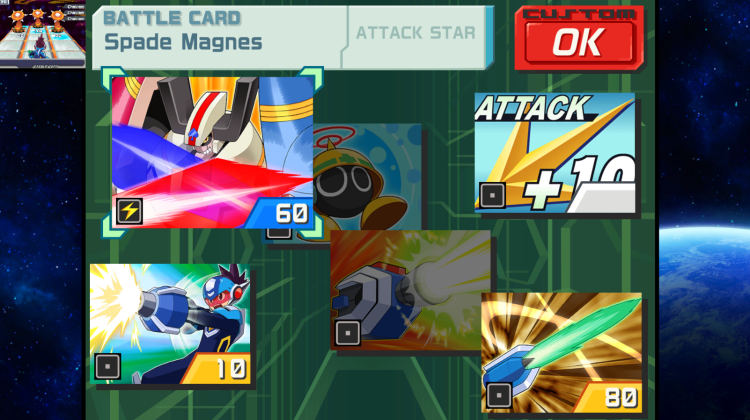
Star Force combat blends real-time movement with turn-based card selection. When the Custom Gauge fills during a fight, the game pauses and presents a randomized selection of Battle Cards from the player's Folder — the deck equivalent in this system. Cards cover attacks, buffs, and defensive options. After selection, Mega Man returns to real-time movement, positioning to land hits or dodge incoming damage. The system bears surface resemblance to modern roguelike card battlers, but the real-time positioning layer and the grid-based spatial logic create something functionally distinct. I found the combat loop absorbing once the deck construction logic clicked, particularly the rule that only identical cards or cards sharing the same column on the selection screen can be combined — a constraint that pushes players toward intentional Folder building rather than stacking the most powerful cards available.
Counterattacks reward timing: land a hit at the precise moment an enemy initiates its own attack, and Mega Man draws an extra card from the Folder. Executing a counterattack while transformed activates a Big Bang — a high-damage finisher that ends fights emphatically. The system incentivizes patience and reads rather than constant aggression, and the counterattack mechanic gives skilled play a tangible mechanical expression.
Star Force 3 adds the most to the combat framework. Background cards in the selection screen cannot be selected normally, but they carry secondary effects — an electric card in the background adds paralysis to another card regardless of column alignment. This layer allows mid-battle adaptation when the current selection fails, but it introduces a randomness that not every player will welcome. The option to ignore the background card entirely and wait for it to cycle forward remains available, which preserves player agency without removing the mechanic entirely. Star Force 3 also introduces Noise forms — persistent transformations drawn from previous enemy types, combinable in pairs, with 10 base forms across both versions producing 100 possible combinations. Building a Noise loadout around a specific playstyle and then testing it against high-level content is where the combat system reaches its ceiling.
Versions, Transformations, and Online Play
Each Star Force game ships with multiple versions following Pokemon's model. Version selection determines Mega Man's transformation form, the exclusive Giga-class cards available, and access to version-specific boss fights. Star Force 1's three versions — Pegasus, Leo, Dragon — differ primarily in their exclusive Big Bang attacks and boss encounters. The transformation variations are mostly cosmetic at this entry level. Star Force 2 steps up with three transformations — Zerker, Ninja, and Saurian — that can be combined in pairs for stacked benefits, or merged into Tribe King for maximum power at the cost of a three-turn limit. Star Force 3 pushes furthest with the Noise system, where the sheer combination count produces meaningfully different approaches to the same encounters.
The collection supports online play across all three games, including both casual and ranked matches, with the ability to queue for all three simultaneously rather than waiting in separate queues. Players who add others with different game versions to their in-game friend list gain access to those version-exclusive transformations, which significantly reduces the pressure to own multiple versions to experience all content. The critical omission is crossplay. Players cannot battle or trade cards across platforms, which splits the competitive pool at launch for a game series that already occupies a niche within a niche. The decision is difficult to explain given that crossplay would directly reinforce the collection's online longevity, and the Star Force community is small enough that fragmentation by platform creates a real problem for anyone hoping to find regular matches.
Restoration and Quality-of-Life Changes
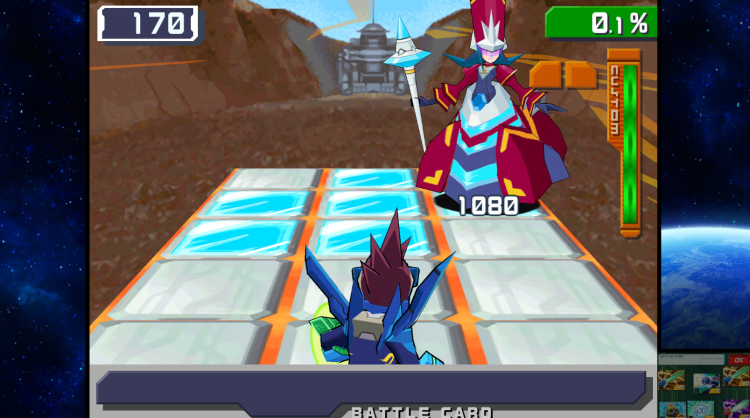
The original DS games presented gameplay across two screens, with the bottom touch screen handling menus, map navigation, and interaction. The Legacy Collection moves that content to a smaller side panel, and players can swap freely between the two display areas. The solution works consistently across standard play. Minigames with unusual screen formatting handle less smoothly — touch inputs are replaced with cursor navigation, and certain puzzle interactions designed for the stylus now require manual input selection. The Star Force 1 constellation puzzles, originally solved by drawing connections with the stylus, now ask players to select which stars to connect through a menu. These adaptations function but carry friction that the original control scheme did not.
Cut content from the original Western releases returns here in full. The Boktai crossover event in Star Force 1, Wave Command Cards in Star Force 2, and Noise Cards in Star Force 3 were all absent from non-Japanese versions and are now restored. Bonus Battle Cards tied to original physical merchandise, in-person events, and Japan-exclusive punch-card peripherals are now accessible from the start through a selection menu. Some of these cards are dramatically overpowered — redeeming them at the opening of a playthrough trivializes early content. Their inclusion is appropriate for a collection, but players who want a balanced experience should hold off.
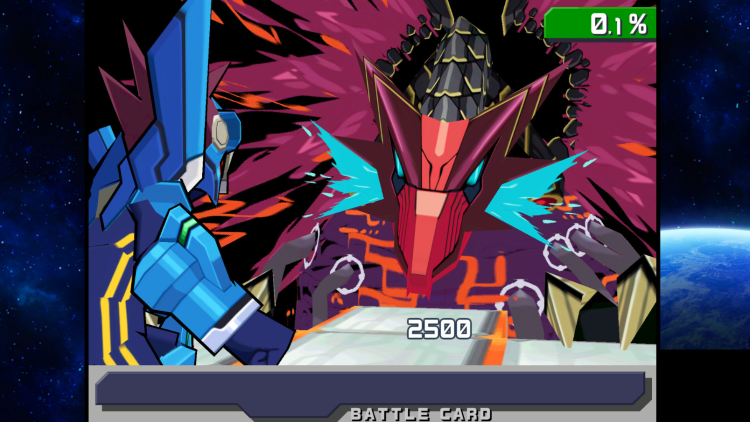
Quality-of-life additions include auto-save, an adjustable random encounter slider, increased movement speed in exploration, and toggleable options for post-battle HP recovery, increased Zenny drops, and guaranteed escape from battle. Star Force 2's encounter rate was historically one of the original release's most criticized aspects, contributing to sluggish pacing through excessive backtracking. The slider directly addresses this without forcing players into a fixed setting. Boss refight locations in Star Force 3 now display as visible avatars in the game world through the Navi Locator toggle, eliminating the original requirement of either memorizing locations or stumbling across them. I found these additions made revisiting areas for completion purposes considerably less tedious, without removing any challenge from combat encounters themselves.
The collection presents no additional difficulty options beyond enemy stat modifications that make the game easier. Players who want a harder experience have no formal path to one. Increasing the encounter rate adds more battles but does not change enemy statistics, so players who have already mastered the combat system face greater volume without greater challenge. This was a criticism of the original releases, and the Legacy Collection does not address it. The PvP multiplayer carries potential to fill this gap if the community grows — competitive human opponents create difficulty the single-player content cannot replicate — but that depends on player population and network stability that are uncertain at launch.
Verdict
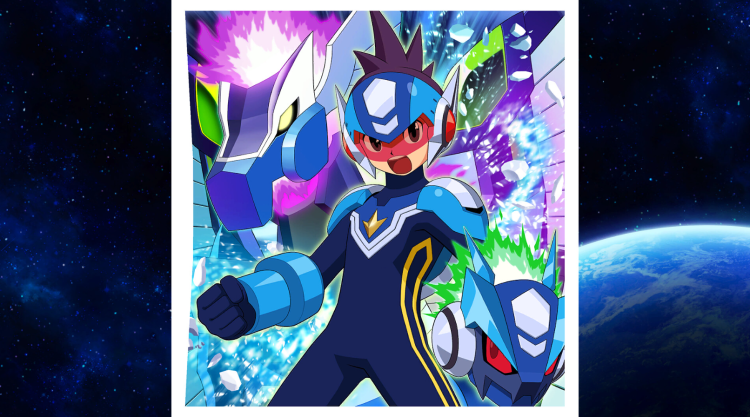
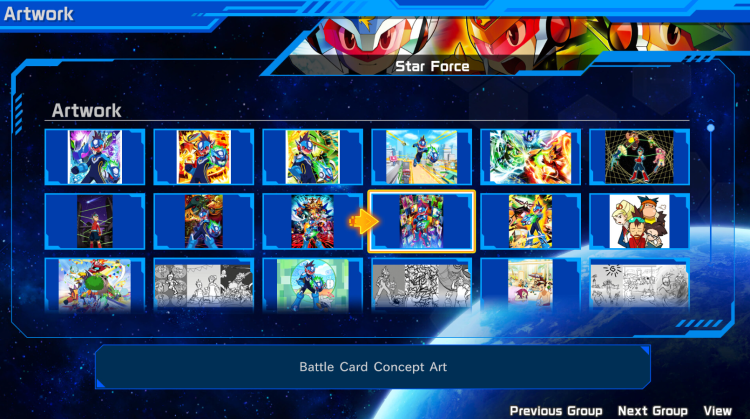
Mega Man Star Force Legacy Collection is an 8/10 game. Capcom assembled a package that treats the source material seriously — restoring cut content, adding meaningful accessibility tools, and delivering a gallery and soundtrack presentation that serves both first-time players and returning fans.
Pros:
- Restored cut content and all seven game versions produce the most complete Star Force package ever released
- Combat system evolves meaningfully across the trilogy, with Star Force 3's Noise combinations offering deep build variety
- Quality-of-life toggles address original criticisms directly without removing content or forcing fixed settings
Cons:
- No added difficulty options leave players who master the systems without a challenge ceiling in single-player
- Lack of crossplay fragments the online playerbase across platforms for a series with a small competitive audience
The Star Force series spent nearly two decades treated as the lesser successor to Battle Network, and the Legacy Collection makes a direct argument against that characterization. The first game's structure is tighter than the second's, and the third's mechanical ambition outpaces both — playing them consecutively gives the full arc that individual entries could not deliver on their own. For anyone who missed these games on DS, this collection removes every barrier that made them difficult to experience.


 Det har lyckligt kopierats... Tack för att du delar vårt innehåll!:

Kommentarer