




Recension av GreedFall: Den döende världen










 Review
 PlayStation
 Steam
Steam Xbox
XboxSpiders released GreedFall: The Dying World out of Steam Early Access on March 10, 2026, days before publisher Nacon filed for insolvency and weeks after the French video game workers union STJV reported that a quarter of Spiders employees had left the studio since early 2025.
Context and Development
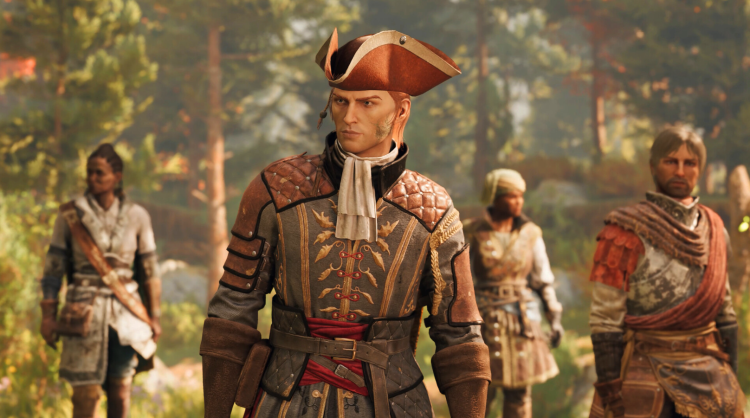
The game is a prequel to Spiders' 2019 RPG GreedFall, set in a world modeled on a fantasy version of 16th and 17th-century Europe and the Americas, complete with colonial politics, religious factionalism, and a plague called the Malichor. Where the first game cast the player as a Merchant Congregation legate traveling to the native island of Teer Fradee, this prequel reverses the perspective — putting players in the role of Vriden Gerr, a native islander forcibly taken to the mainland. The result is a game that demonstrates real ambition and occasionally reaches it, then stumbles over incomplete companions, texture failures, and a combat system that runs out of variety before the campaign does.
The circumstances around The Dying World 's release cannot be separated from what ends up on screen. In 2024, STJV published an open letter from Spiders employees describing deteriorating work conditions, growing managerial turnover, and a lack of transparency following Nacon's acquisition of the studio. The game entered Early Access during this period to a broadly tepid reception. In the weeks before the 1.0 release, Nacon filed for insolvency. An STJV representative stated in a response to a media inquiry that working conditions had not meaningfully improved and confirmed no project was planned after The Dying World's release. Spiders has spent seventeen years building RPGs in increasingly detailed worlds, and the studio's instinct for world-building has not abandoned them here. The rest of the game shows the cost of what the development period described.
Setting and Premise
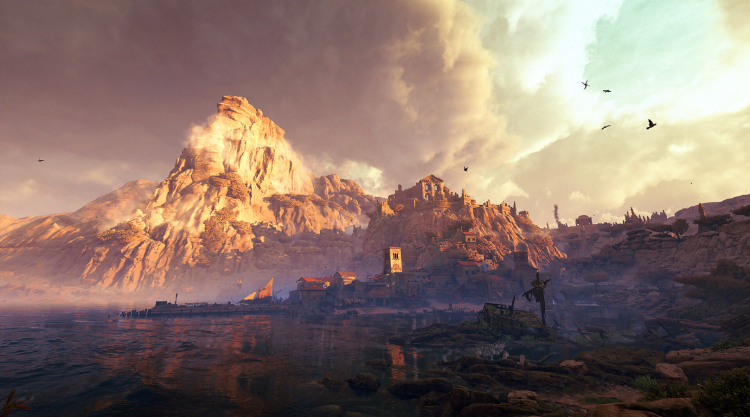
The opening three hours take place on Teer Fradee before Vriden Gerr is captured and transported to the mainland — a structural inversion of the first game, where the player spent several hours in Seren before sailing to the island. The main quest on the continent is direct: secure enough funding and resources to purchase passage home. That goal pulls Vriden Gerr through the political landscape of the Merchant Congregation and Bridge Alliance territories, touching on Theleme's religious factionalism, Deutan imperial history, and, notably, the Nauts — the sailor faction that received less attention in the first game. The game takes players to the Nauts' island-city of Uxantis and into sessions with the Council of Admirals. Characters from the first GreedFall appear, including Admiral Cabral and Mev, and a figure who appears to be Constantin d'Orse operates with unconvincing cover. The connection to the first game extends to the d'Orse and de Vespe family conflict introduced in the original's DLC, The de Vespe Conspiracy.
The political texture Spiders builds is genuinely dense. The Bridge Alliance is not monolithic — internal tensions between member states surface throughout, with at least one faction harboring imperial ambitions. The colonialism themes from the first game deepen here by design. Vriden Gerr navigates a mainland that treats islanders as curiosity at best and a commodity at worst, and the story tracks how that pressure fractures even close relationships. Nílan, Vriden Gerr's childhood friend, responds to oppression through vengeance, a path the game frames as understandable but doomed. The narrative does not ask the player to argue against Nílan's anger toward those harming his people but rather to argue for his own survival. When the writing commits to this complexity, the result is the kind of RPG storytelling that earns its length.
Antagonist and Characters
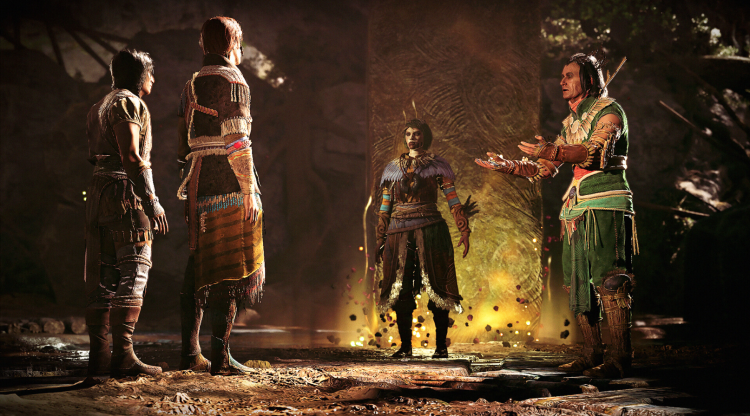
General Kurnaz functions as the game's central antagonist, a fascist-adjacent figure who leverages manufactured hatred for political consolidation. Neil Newbon voices the role. Bryony Corrigan delivers performances in both English and the fictional native language of Teer Fradee; Sam Woolf plays Ludwig, a battered veteran; Camilla Aiko handles Sybille de Vespe's performed nihilism with precision. The cast is strong enough in places to compensate for dialogue writing that occasionally abandons nuance. Villains leave diary entries detailing their plans in unlocked buildings. Faction leaders accept an islander's unverified testimony on threats to their territory without hesitation, then follow them into battle. The story rushes through its second half in ways that undercut the character work the first half builds.
One companion, Till — a Coin Guard deserter seeking to account for his part in anti-islander violence — has no personal questlines at 1.0. Every other companion carries three. Till stands on the ship and apologizes. The story he represents, telling the account of a perpetrator attempting amends, would require care to handle correctly; the finished game does not attempt it. Romance arcs are similarly thin. The system reduces to selecting responses partners want to hear until a scripted conclusion triggers. Sybille de Vespe's writing outside of the romance track is among the best in the game. The romance itself arrives without buildup and delivers nothing the companion quests earn.
Combat System
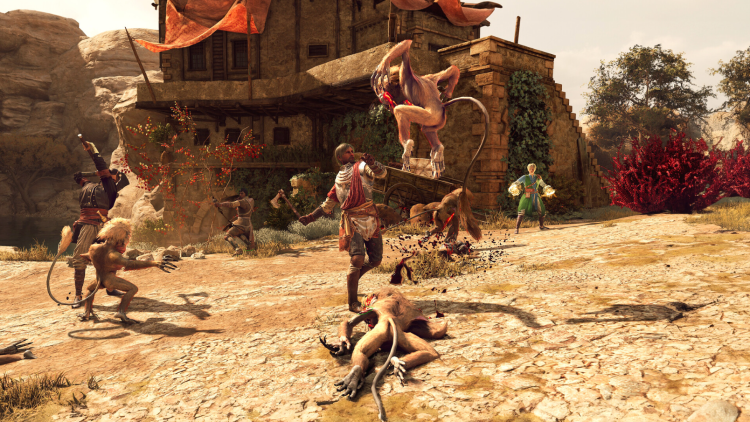
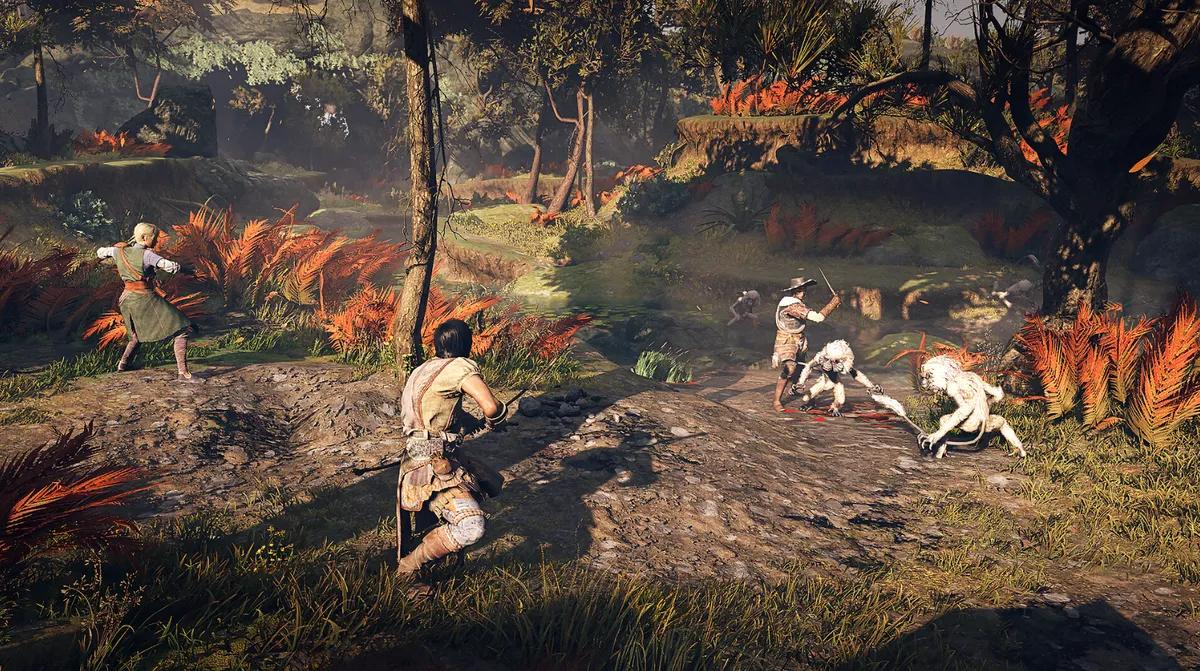
The shift from the first game's action RPG framework to Real-Time With Pause was the most significant design change introduced during Early Access, and I found this the most divisive structural decision in the game. Regular attacks fire at automated intervals; special abilities are selected from a command bar at the bottom of the screen; pausing queues up targets and movement inputs for all four party members. The system draws comparisons with Dragon Age: Origins and Knights of the Old Republic, and also shares structural elements with Xenoblade in how auto-attacks build resources consumed by cooldown-gated abilities.
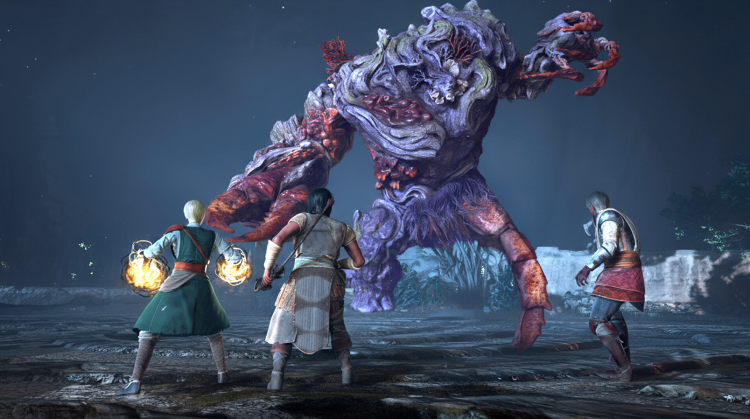
Full Tactical mode allows camera control and direct commands to all party members. Lower modes reduce micromanagement options, and the most minimal setting approaches the original game's behavior — except the dodge roll is absent across all modes. Players who prefer RTWP will find the system functional and, in its most demanding moments, genuinely engaging. The problem is variety. Two-thirds of the game's combat encounters pit the party against human factions whose ability sets mirror the player's own. Creatures — raptors, monkeys, large cat-like animals — make up the rest, alongside five or so boss encounters. The 30-to-50 hour campaign outlasts the combat system's ability to generate new challenges, and the shortage of crowd control abilities accelerates this. Most fights resolve through sequential focus-fire and sustained healing, making two clerics in a four-person party close to mandatory on higher difficulties.
RPG Progression and Gear
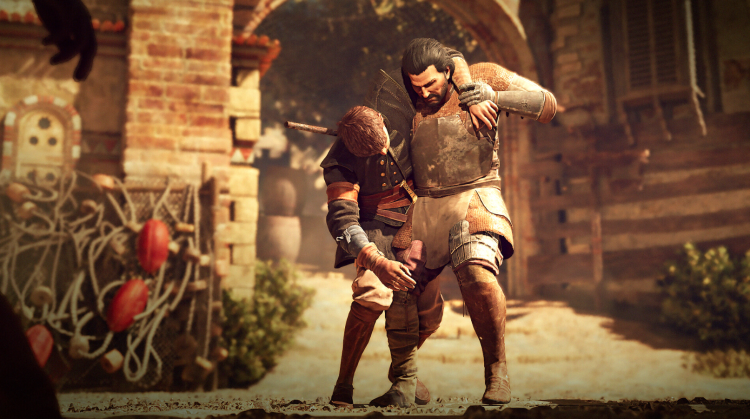
The gear and progression systems represent the game's strongest mechanical work. Equipment carries both a quality tier — Uncommon through Legendary — that determines the number of stat bonuses, and a numerical tier from I through XIII representing overall power. Craftsmanship upgrades apply significant boosts to armor values, giving the crafting system enough impact that it registers as meaningful rather than supplementary. Breaking down old equipment to fund upgrades for new pieces creates decisions that stay relevant across the campaign. The gear itself is visually varied and detailed, which makes the texture-loading failures more frustrating by contrast.
Attribute and skill acquisition follows standard RPG conventions, but the level cap keeps stat decisions meaningful through the full campaign. Talents return from the first game, functioning as skill checks for locked doors, tracking, and additional dialogue options. Different party members support different talents, which ties party composition to non-combat choices in a way the game uses consistently. The skill tree structure does create one persistent tension: abilities are organized by weapon type and combat stance, which means committing to a sabre-wielding DPS build immediately renders most of the tree irrelevant. Respec options exist, and hybrid builds are viable, but the tree would benefit from a structure less anchored to specific loadouts.
Technical State and Presentation
The texture loading problems that affected the Early Access release persist at 1.0. During normal play sessions, low-resolution textures replace proper assets or fail to load at all, gradually correcting over time before resetting on the next save load. In the worst cases, character armor fails to render entirely, leaving floating heads and disconnected limbs. The game's color palette is already heavy on sand and grey — the visual tone is desaturated by design, fitting the subtitle — and texture failures compound this into something that reads as unfinished rather than stylized. I played through the full campaign and encountered four to five crashes during approximately fifty hours.
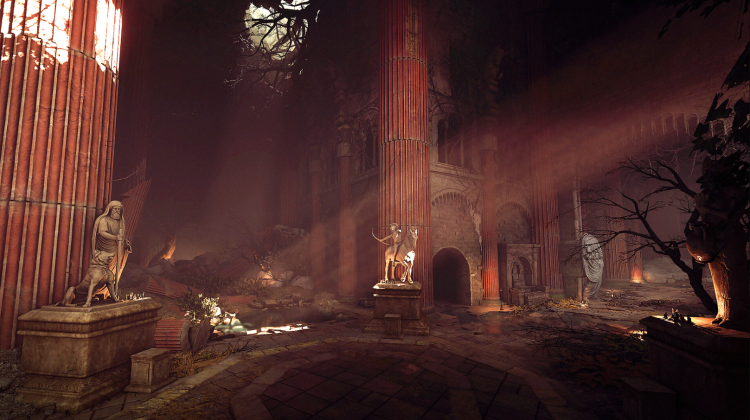
The cities are large and distinct. Fully realized urban environments replace the repeated city layouts of the first game, and the faction ideologies genuinely read through the architecture and population density of each location. Ancient ruins of what the game calls an Astrian civilization appear in multiple quests, though this thread feels like it was introduced to support a story beat that does not fully land. Dialogue scenes operate as static exchanges between characters standing across from each other, arms crossed, cameras fixed. The voice direction — with the exception of the protagonist and a few key performances — lacks emotional variation even in scenes that demand it. The world the writing constructs is more realized than what the direction delivers.
Verdict
GreedFall: The Dying World is a 7/10 game. The inverted colonial perspective generates the most morally complex RPG storytelling Spiders has produced, the RTWP combat system works on its own terms within the genre it draws from, and the world-building continues to expand in ways that justify returning — but an incomplete companion in Till, a romance system that undermines well-written characters, and technical failures that a more stable development period would likely have resolved leave the game short of what its best sections demonstrate is achievable.
Pros:
- Colonial perspective and companion writing deliver the strongest narrative Spiders has built in this world
- Gear system and Craftsmanship upgrades create meaningful progression decisions across the full runtime
- Fully realized faction cities replace the repeated designs of the original game
Cons:
- Companion Till ships without any personal questlines, an absence that registers as unfinished content
- Texture loading failures and four to five crashes across fifty hours reflect the instability of the development period
The Dying World contains enough of what made the original GreedFall worth playing — the dense political world, the companion investment, the sense that the setting has been thought through carefully — to earn attention from players who valued those elements in 2019. Post-launch patches may address the technical issues, and if Nacon's insolvency proceedings allow Spiders to support the title, the gap between what the game is and what its best moments suggest it could have been may narrow. For now, what exists is an uneven but frequently compelling RPG that ran out of time before it ran out of ideas.
Best RPGs 2026 — how the genre’s branching choices, deep systems, and powerful sense of escapism can completely pull you in—sometimes for hundreds of hours at the cost of a good night’s sleep.


 Det har lyckligt kopierats... Tack för att du delar vårt innehåll!:



5% insättningsbonus upp till 100 ädelstenar

0% avgifter på insättningar och uttag.





11% insättningsbonus + FreeSpin


EXTRA 10% INSÄTTNINGSBONUS + GRATIS 2 HJULSPINN

Gratis case och 100% välkomstbonus


5 gratisfodral, daglig gratis & bonus

3 gratis casinos och en bonus på 5% på alla kontantinsättningar.

+5% till insättning




Kommentarer