




Recension av Planet Of Lana 2










 Steam
Steam PlayStation
 Xbox
Xbox Review
Wishfully Studios released Planet of Lana 2: Children of the Leaf on March 5, 2026, two years after the events of its predecessor and several years after the original game built its reputation on hand-painted visuals and wordless storytelling. The sequel takes place in a world where Lana's people and the robots that once threatened them now coexist, with the robots repurposed as labor machines — a changed political landscape that the game uses to introduce a new human antagonist in the technologically advanced Dijinghala tribe. Composer Takeshi Furukawa, who scored The Last Guardian, returns to provide the orchestral soundtrack, and the fictional language that carries all dialogue appears again without subtitles. What Wishfully delivers is a game that improves on its predecessor in nearly every measurable way, then spends its first half testing how long a player will wait for the better version of itself to arrive.
Setting and Story Structure
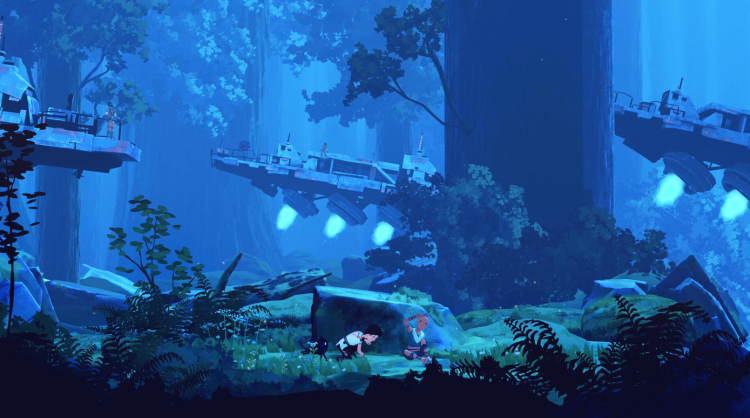
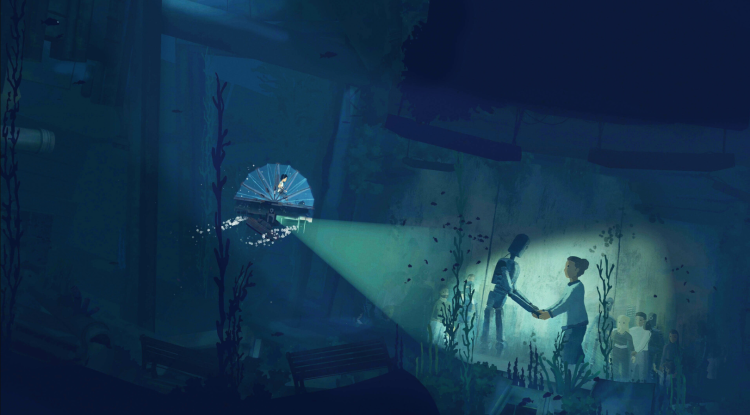
The Dijinghala, pushing south from their territory, drop a crystal leaking deadly green gas that poisons Lana's adoptive younger sister. Lana sets out to collect three ingredients needed to craft a cure, a premise that amounts to a fetch quest spanning the game's first three chapters. That fetch quest takes her through a tropical zone where Dijinghala submarines explore a crashed spaceship, an ice-covered mountain, and a lush-green forest. Each location holds fragments of a more compelling storyline — who the Dijinghala are, what the strange rocks they mine actually contain, and whether their command of technology connects to the robot invasion of the first game — but the game defers those answers for its second half.
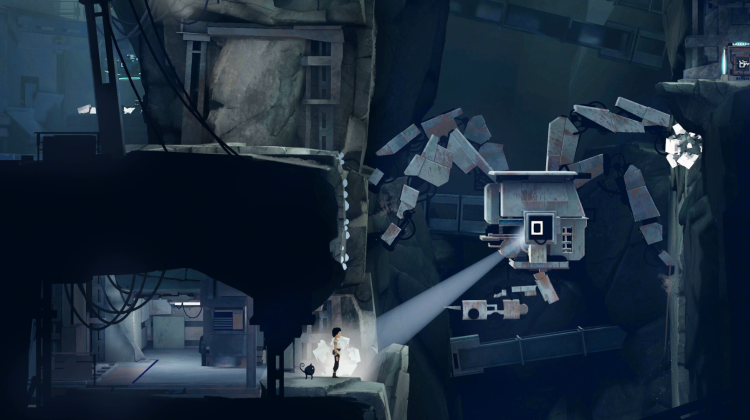
Planet of Lana 2 communicates entirely through a constructed fictional language, relying on vocal inflection, body language, camera framing, and illustrated notes to convey meaning. The actors deliver lines with enough tonal precision that broad-strokes comprehension is achievable without subtitles. The approach works well when the underlying narrative carries genuine complexity — the Dijinghala mystery generates questions that the ambiguity sharpens rather than obscures. But "sick child needs medicine" requires no interpretation, and three hours inside a plotline that presents no real ambiguity leaves the game's most effective storytelling tool with nothing to do.
Once the medicine quest resolves, the game commits to hit-after-hit of revelations about the Dijinghala, their masked cult-leader figure, the origin of the strange rocks, and the connection between all of this and Mui's own history. The final moments reach a climax that is both narratively rewarding and designed to tease a sequel with a deliberate cliffhanger. The ending arrives abruptly enough that several reviewers noted it cuts off mid-action, and it is possible to understand both why Wishfully made that choice and why it frustrates.
Visuals and Score
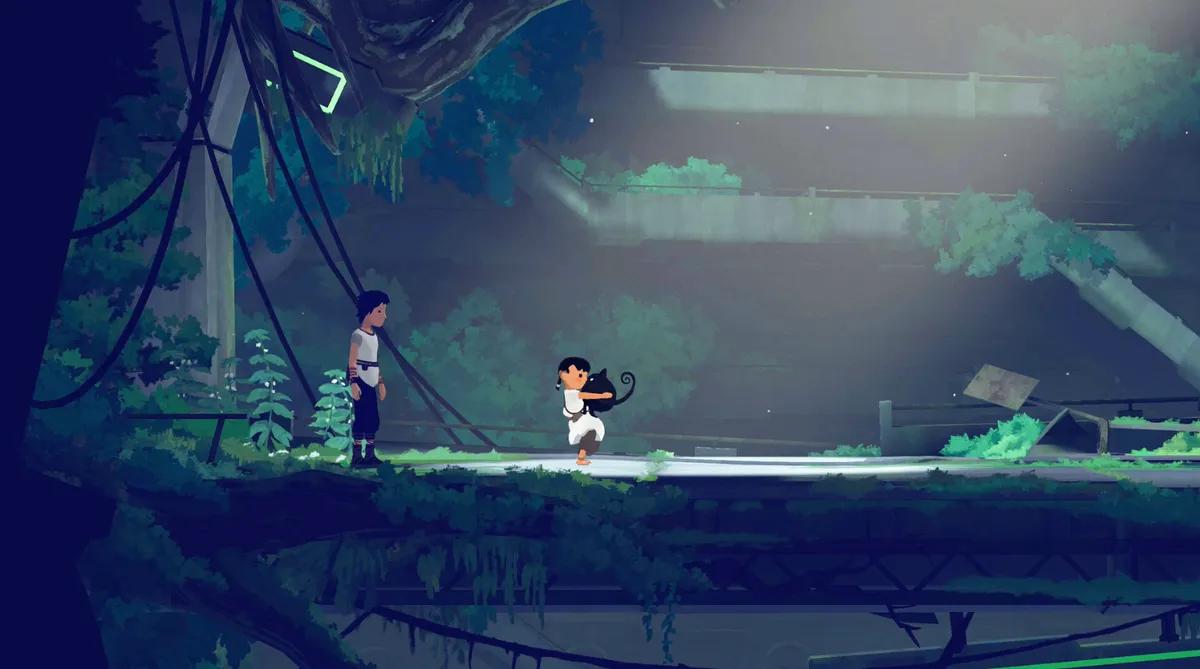
Every chapter in Planet of Lana 2 operates as a distinct visual environment. The opening area surrounding Lana's home uses simple greens and natural light to reinforce familiar terrain. Chapter Three, which runs primarily underwater, shifts the palette to dark blues and purples that signal restriction and unease before a single puzzle begins. The final hours cycle through all previous environments, using the returning color schemes and musical motifs as navigation cues — players who recognize a pattern from an earlier chapter can anticipate which mechanics will apply.
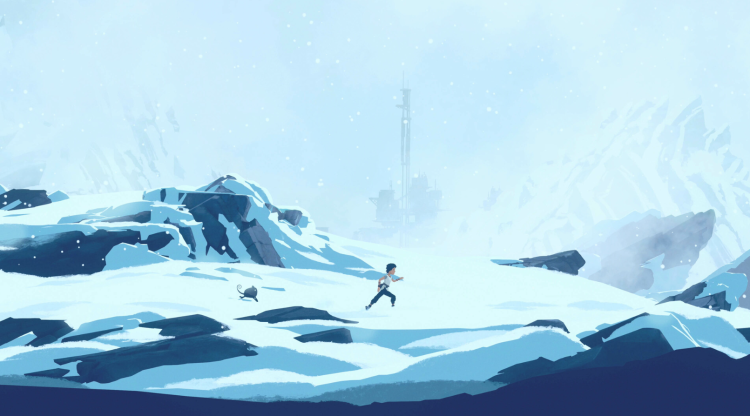
The orchestral score Furukawa composed draws from multiple sources simultaneously. The droning horns and sweeping string sections recall The Last Guardian, but the score also carries structural echoes of classic Star Wars and 2001: A Space Odyssey, producing something that functions as ambient sound design as much as dramatic accompaniment. The art direction operates at the same level — hand-painted environments with visual depth that rewards examination at a pace the game's platforming sections do not always allow. Lana 2 runs approximately five to six hours, though a player who sets the game running on a television and leaves the room for stretches will likely log more time than that, and this is not a criticism.
Gameplay Mechanics
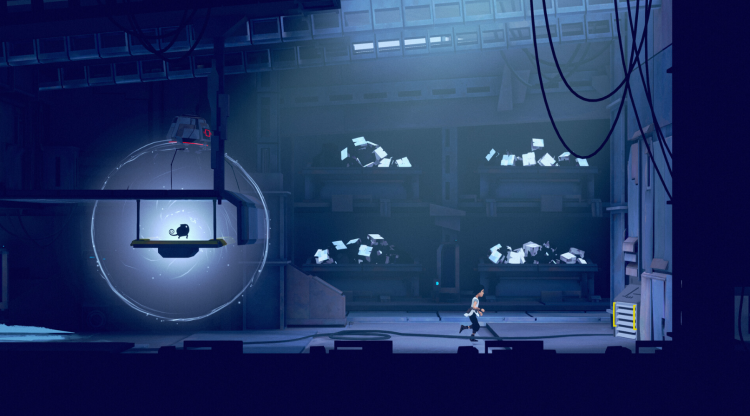
The puzzle-platforming structure from the first game carries forward with modifications. Lana can now wall jump, sprint, and slide, additions that increase her mobility relative to the first game. Mui retains abilities from the predecessor — fitting into small spaces, jumping to elevated positions, activating junction boxes — while gaining new options including the capacity to hypnotize certain creatures. Lana herself can hack specific robots and take control of flying drones. The majority of puzzles build on both characters using their distinct capabilities to enable the other's progress.
I found the creature-based puzzles to be the sharpest design work in the game. A small soot-like creature that leaves a flammable trail in its wake requires the player to understand both its movement pattern and how that trail interacts with the specific obstacle ahead. Ink fish feature in another set of puzzles where the solution demands more extended reasoning about sequencing. These puzzles arrive at a balanced difficulty — demanding enough to produce genuine satisfaction on completion, not so opaque as to push toward frustration.
The weakest section is Chapter Three. The underwater puzzles that dominate this chapter require Lana to swim at a speed that makes timing margins punishing. An electrical shark kills Lana instantly on detection. Running low on air while figuring out the next step kills her on a separate timer. Neither the swimming controls nor the spatial logic of underwater navigation reaches the quality of the game's surface-level puzzles, and Chapter Three constitutes the entirety of the second medicine ingredient. It is long, it is the weakest chapter in the game, and it sits in the middle of a five-hour runtime where pacing already competes with narrative momentum.
Progression and Puzzle Design
The game's best puzzles concentrate in its final hour. Wishfully constructs the climactic section around Lana needing to move quickly while simultaneously commanding Mui carefully — a combination the earlier game rarely demanded. Most preceding puzzles ask the player to alternate between the two characters rather than manage them in parallel under time pressure. The puzzles that require both agility from Lana and precision from Mui simultaneously are the strongest in the game, and arriving at them in the final stretch makes clear what the design was building toward.
Earlier puzzles are competent but operate on a narrower range. Adding more steps to a puzzle that already works extends its length without expanding its logic. Decreasing the timing window on a specific action raises the stakes without requiring new thinking. The middle-game puzzles trend toward these two modifications rather than introducing new conceptual territory. They function without failing, but the gap between them and the finale puzzles is wide enough to notice.
The first game contained two puzzles that exceeded every other challenge it offered, and players who found those two puzzles to be the high point carried a specific expectation into the sequel. Planet of Lana 2 distributes its difficulty more evenly, maintaining a consistent challenge across the full game rather than concentrating it in isolated moments. Whether that constitutes an improvement depends on what the player wanted from the difficulty design. A player looking for sustained engagement throughout will find the sequel more satisfying than the first game.
Comparison to the First Game and the Genre
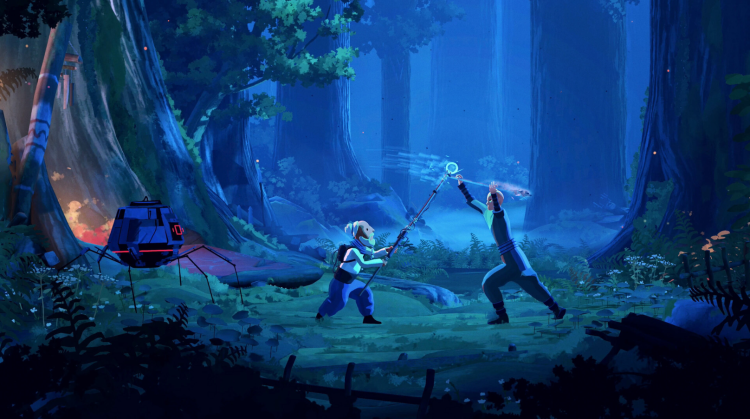
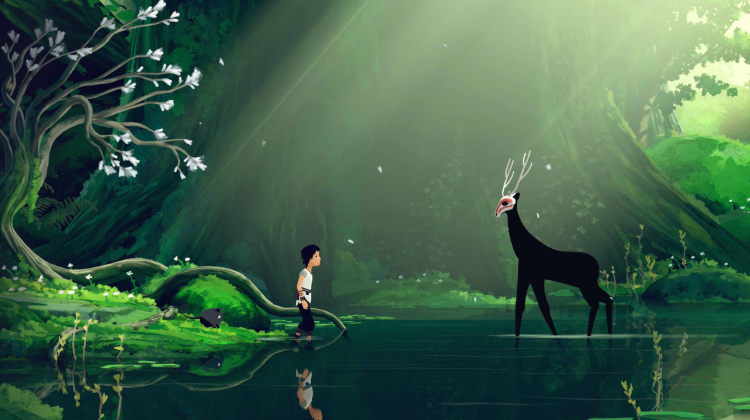
The Ghibli-inspired aesthetic that defined the first Planet of Lana extends further in the sequel. New environments include frozen landscapes and ocean depths, and the creature roster expands to include a Sacred Deer that reviewers have compared directly to Princess Mononoke. The lore commitments are also deeper: the sequel explains where Mui came from and provides more context for the technologically advanced civilization whose ruins Lana explored in the first game. These answers are delivered without closing every open question, which preserves the world's ability to sustain a third game.
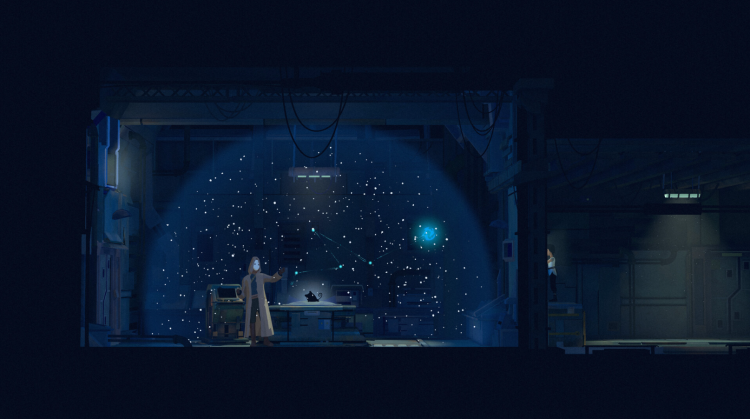
Planet of Lana 2 operates in a genre that includes Inside, Little Nightmares, Somerville, and Gris — 2.5D puzzle-platformers that prioritize atmosphere and narration over mechanical complexity. The floaty jump physics that characterize these games appear here as well, and a player without prior experience in the genre may find the more frantic platforming sequences frustrating precisely because of this. The movement is a design choice inherited from contemporaries rather than a flaw specific to Wishfully's execution.
I think Planet of Lana 2 earns a place alongside the strongest entries in that genre, not because it solves every problem — the first half is structurally weaker than it should be, and the cliffhanger ending lands short of a complete resolution — but because the second half and the overall visual and auditory construction justify the full runtime.
Verdict
Planet of Lana 2 is a 7/10 game. The back half delivers on the promise of the first game with a mystery that pulls forward and puzzle design that finally deploys its mechanics at full capacity, but the fetch-quest structure of the opening three hours and the punishing underwater chapter in the middle cost the game time it cannot afford at five hours total.
Pros:
- Second-half story revelations build in sequence and pay off the game's constructed mysteries
- Consistent puzzle difficulty throughout, with creature-based mechanics adding genuine complexity
Cons:
- First three hours prioritize a fetch quest over the more compelling Dijinghala plotline
- Chapter Three underwater puzzles are the weakest section in the game by a significant margin
- The ending cuts off mid-action in a way that satisfies as a setup for a sequel but not as a conclusion in its own right
The visual and musical craft Wishfully brings to Planet of Lana 2 justifies its place in the genre alongside Inside and Gris. The pacing problems are real, but they are front-loaded — a player who reaches the second half will find a game that uses everything it built earlier with precision. A third game, which the ending clearly sets up, has the foundation to deliver on all of it from the first chapter.
Exploring the Best Single Player Games 2026 is a reminder that solo gaming still offers some of the most immersive stories, memorable characters, and emotionally rich experiences you can enjoy at your own pace.


 Det har lyckligt kopierats... Tack för att du delar vårt innehåll!:



5% insättningsbonus upp till 100 ädelstenar

0% avgifter på insättningar och uttag.





11% insättningsbonus + FreeSpin


EXTRA 10% INSÄTTNINGSBONUS + GRATIS 2 HJULSPINN

Gratis case och 100% välkomstbonus


5 gratisfodral, daglig gratis & bonus

3 gratis casinos och en bonus på 5% på alla kontantinsättningar.

+5% till insättning




Kommentarer