




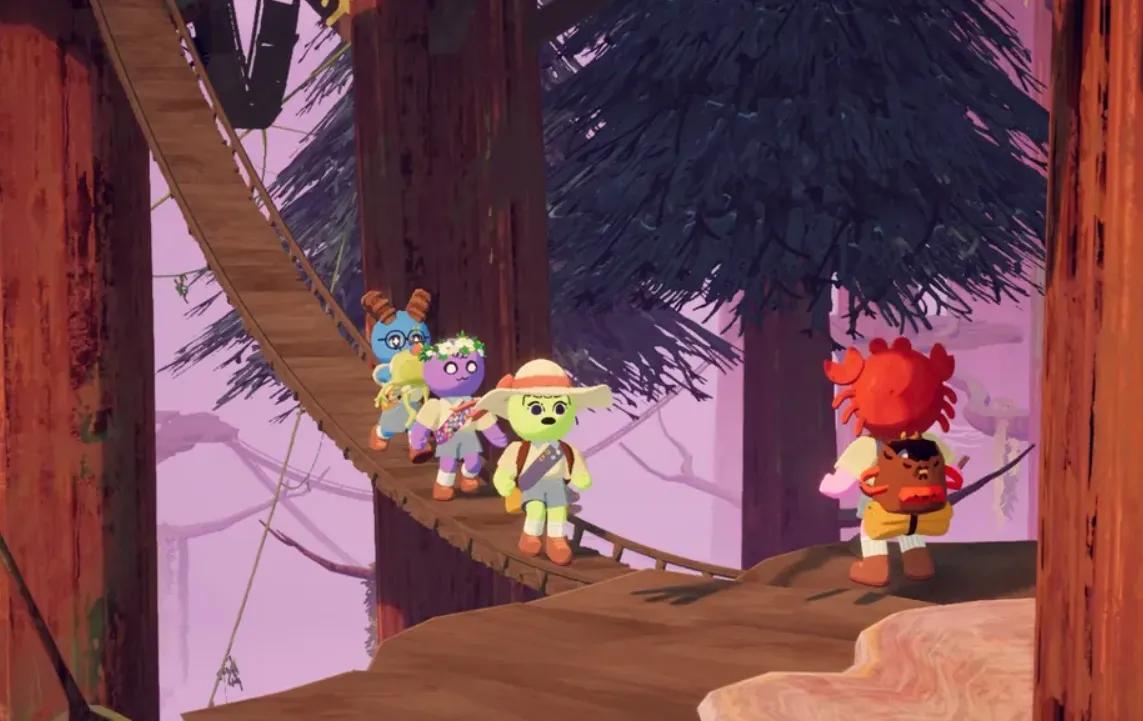
Peak byggdes aldrig för att hålla för evigt, säger PEAK-utvecklarna










 Spel
Spel Steam
SteamPEAK devs are making it clear that Peak’s rapid rise was never meant to turn the game into a permanent live service. The co-op climbing game, developed by Aggro Crab and Landfall, launched as a short experiment born from a four-week game jam. It went on to sell more than 10 million copies, but that scale has not changed the studios’ long-term intentions. The teams are continuing active development, yet they are already setting expectations that Peak will reach a natural endpoint.
In an interview with GamesRadar+, Aggro Crab studio head Nick Kaman explained that Peak’s post-launch life is being handled with restraint rather than expansion for its own sake. Support remains ongoing, but the goal is not endless growth. Both studios shifted into full production mode after launch, releasing fixes and seasonal updates such as a winter event featuring snowball fights. Even so, Kaman stressed that the work has a finish line.
“We’re currently working on it basically full-time while the rest of our team is wrapping up Crashout Crew,” Kaman said. “It’s not going to be a forever game but we also don’t want to leave anything on the table.” — Nick Kaman
Peak launched in June after only four months of development. Within a week, it had crossed one million copies sold. That speed left little room for polish, localization, or platform expansion, which Kaman openly acknowledged later. The original plan was modest. The teams are expected to release the game and step away. Instead, server strain, bugs, and a growing audience forced an immediate pivot.
“When we flew to Sweden to release the game with the Landfall team, we were ready to hit the launch button and go into vacation mode,” Kaman said.
“That quickly became a pipe dream.”
The sudden success turned Peak into a full-scale production overnight. Systems that were acceptable in a small experimental release became problems once millions of players were involved. Both studios had the experience to respond, but the workload was intense. Kaman previously said the teams had been “running on pure adrenaline” for months, a pace that is not sustainable. As a result, update frequency is expected to slow going forward.
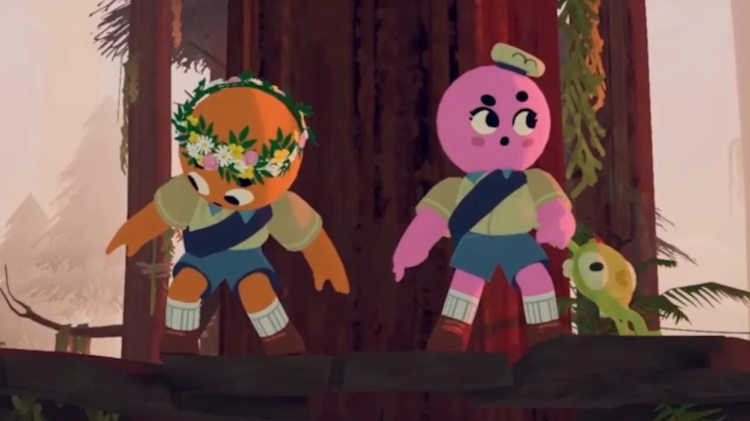
Despite that slowdown, PEAK devs are not walking away abruptly. Kaman said the game is profitable enough that the studios could continue expanding it indefinitely. He rejected that approach. The aim is to deliver the ideas the team genuinely wants to build, then move on.
“We could milk it for quite a while,” Kaman said. “Our goal is to get it to a point where we’ve done everything we’re excited about, and after that it’s on to the next one.”
Peak’s development history is unusual even by indie standards. Aggro Crab and Landfall met at GDC and discovered overlapping design philosophies. Landfall had already found success with Content Warning, while Aggro Crab was coming off projects like Going Under and Another Crab’s Treasure. Their collaboration relied on shared trust and a willingness to discard established studio routines.
“I don’t think it’s something that’s really been attempted before,” Kaman said of the dual-studio structure. “You have to really be willing to let go of your studio’s established way of doing things and just roll with the punches.”
Marketing played a minimal role in Peak’s growth. The teams relied on word of mouth and creator-driven exposure, with Kaman estimating that most visibility came organically. Design choices leaned into physical comedy and failure states that translated well to short clips. The result was rapid adoption without a traditional promotional campaign.
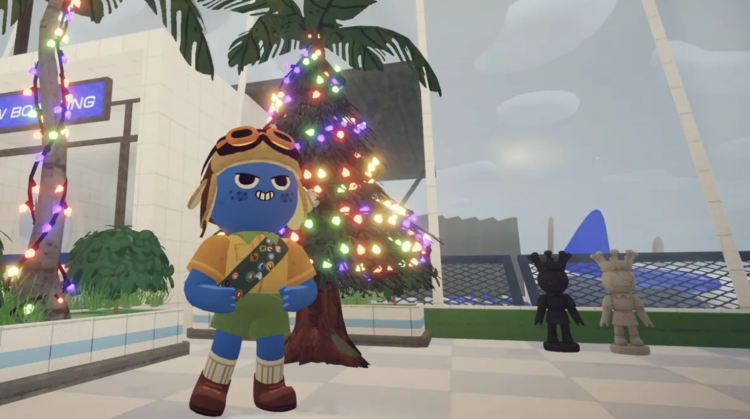
That visibility also brought scrutiny. Peak sits within the growing “friendslop” genre, a loose category of social-first multiplayer games that prioritize shared chaos over presentation or narrative. Kaman has been dismissive of backlash aimed at the genre, arguing that these games are not attempting to meet conventional prestige standards.
“There’s backlash because sometimes these games forego traditional quality markers,” he said. “These games aren’t trying to be Game of the Year.”
Even with that confidence, the team has been open about mistakes. Post-launch issues included broken biome rotations and unreachable objectives caused by procedural errors. Kaman described the studio’s response as radical transparency, framing bugs plainly rather than deflecting blame.
“Ultimately we’re just a small, scrappy team of humans trying our best and sometimes we mess up,” he said. “If we can acknowledge it plainly or make a joke about it, we get a surprising amount of grace from the community.” — Nick Kaman
As Peak continues to receive updates, Aggro Crab is also finishing Crashout Crew, a co-op forklift game already in development. There are no current plans for another collaboration with Landfall, though Kaman has not ruled it out. For now, the message from PEAK devs is consistent: the game will be supported with care, not stretched to exhaustion.
Read also, the November patch continued that approach with Peak 1.44.a, which reworked the Scout Cannon after players pushed the tool far beyond its original design, while also fixing a long-standing technical issue that had persisted since launch.


 Det har lyckligt kopierats... Tack för att du delar vårt innehåll!:



5% insättningsbonus upp till 100 ädelstenar

0% avgifter på insättningar och uttag.





11% insättningsbonus + FreeSpin


EXTRA 10% INSÄTTNINGSBONUS + GRATIS 2 HJULSPINN

Gratis case och 100% välkomstbonus


5 gratisfodral, daglig gratis & bonus

3 gratis casinos och en bonus på 5% på alla kontantinsättningar.

+5% till insättning




Kommentarer